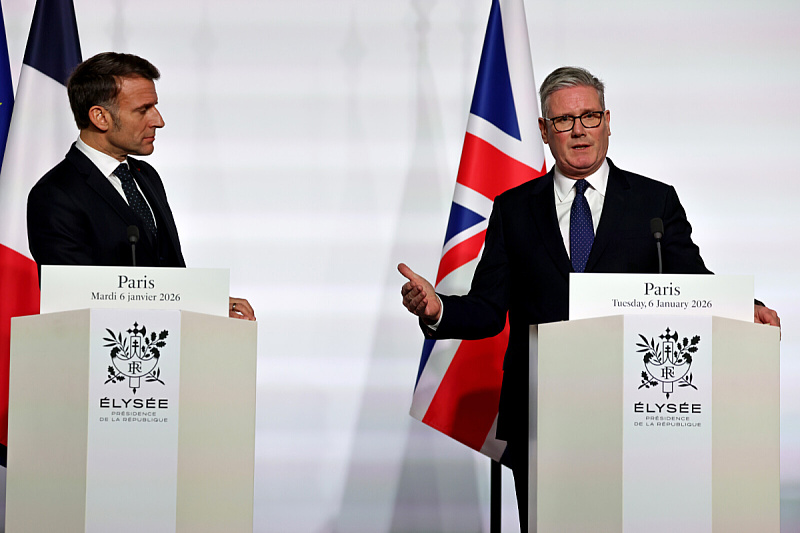
Trump said the U.S. military will cooperate with other countries to block all maritime traffic in that strait, after weekend talks failed to reach an agreement to end the six-week conflict with Iran. "The blockade will begin soon. Other countries will be involved in this blockade," Trump stated in a post on the Truth Social platform on Sunday. The blockade began on Monday at 4 p.m. Bosnia and Herzegovina time. However, NATO allies, including the United Kingdom and France, have indicated they will not be drawn into the conflict by participating in the blockade. They emphasized the importance of reopening the strait, which normally handles one-fifth of the world's oil and has been effectively closed by Iran since the conflict began on February 28. Their refusal to participate marks another point of disagreement with Trump, who has threatened to withdraw from the military alliance and is considering pulling some U.S. troops out of Europe after several countries refused to support the U.S. campaign against Iran by denying American military aircraft access to their airspace. NATO Secretary-General Mark Rutte told European governments that Trump wants concrete commitments in the near future to ensure the security of the Strait of Hormuz, diplomats told Reuters last week. NATO could play a role in the strait if all 32 member states agree to form a mission, Rutte said a few days ago. Several European countries have signaled they are willing to assist in the strait, but only once a permanent ceasefire is in place and an agreement is reached with Iran that their ships will not be attacked. France will organize a conference with the United Kingdom and other countries to form a multinational mission to restore navigation in the strait, French President Emmanuel Macron stated on Monday on the social media platform X. "This strictly defensive mission, separate from the warring parties, will be deployed as soon as the situation allows," Macron said. The United Kingdom is working on ways to reduce insurance premiums for ships passing through the strait after the fighting stops, according to a senior European official. The Strait of Hormuz should be reopened through diplomatic means, Turkish Foreign Minister Hakan Fidan said on Monday, adding that forming international forces for oversight would be complicated, and he called on NATO to renew relations with Trump at the summit in Ankara in July.
Society
NATO will not follow Trump's blockade of the Strait of Hormuz: France and the UK have their own solution.
Allies of the United States within NATO announced on Monday that they will not participate in President Donald Trump's plan to blockade the Strait of Hormuz, further escalating tensions within the alliance.
ingestion