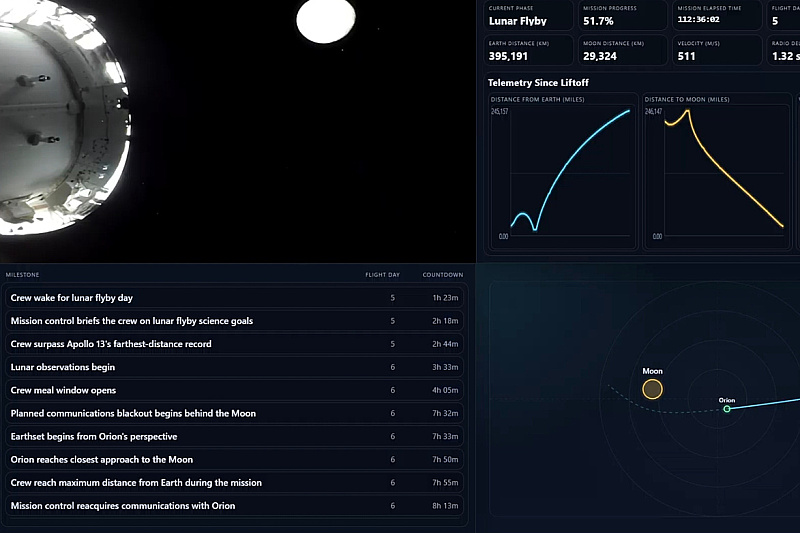
As stated on NASA's official website, the central hub for following the broadcast is the NASA+ platform, a free streaming service that requires no subscription and is accessible via web browsers, mobile apps, and devices such as Roku, Apple TV, and Fire TV. On this platform, it is possible to follow the broadcast of the Artemis II mission, and besides the NASA+ platform, the broadcasts can also be followed via social media and video platforms, including YouTube, Facebook, X (formerly Twitter), Twitch, and other streaming services, where NASA regularly streams rocket launches, astronaut activities, and important events from space missions. For the first time in history, Netflix will also livestream a real space mission. NASA's Artemis II flight around the Moon will be broadcast live to millions of viewers worldwide. The broadcast is scheduled to begin around 1 p.m. Eastern Time on April 6, when people will be able to watch astronauts traveling around the Moon in real time. Artemis II marks humanity's return to deep space after more than 50 years, and now anyone with a screen can witness this event as it unfolds, without special accreditation or access. Millions of people worldwide will follow the event in real time, and during the broadcast, there will be a 40-minute signal interruption from the Orion capsule at the moment they are on the far side of the Moon. Of course, during this maneuver, the crew will take thousands of photos and recordings to explore the far side of the Moon.
Society
NASA announced how to track the historic path of the Orion capsule and a view of the far side of the moon.
The U.S. space agency NASA has released detailed information on how the global public can follow the broadcasts of the Artemis II mission, which will make history in a few hours by orbiting the far side of the moon.
ingestion