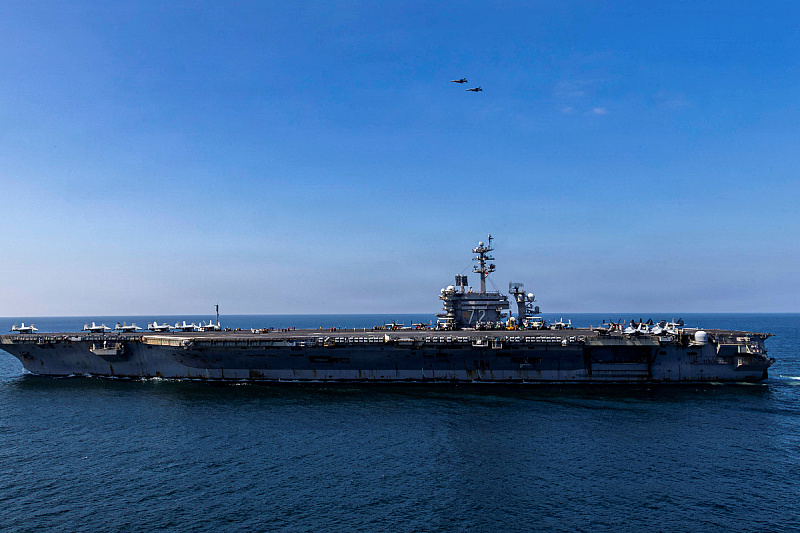
According to the White House announcement, the 2027 defense budget plans for $1.5 trillion, of which $65.8 billion would be directed toward capital shipbuilding. These funds would finance the production of 18 combat and 16 non-combat ships, as stated in the budget overview.
The document emphasizes that as sea lanes worldwide are increasingly contested, it is of critical importance for the United States to efficiently deliver the various maritime platforms needed to ensure maritime domain awareness and deterrence.
The budgetary resources intended for the sea would be directed toward building the planned Trump fleet, named the Golden Fleet, which he announced in December and which will include two numerous Trump-class ships.
The President claimed that these vessels would be 100 times more powerful than any ship ever built. Financial resources would also be directed toward next-generation frigates, increasing public shipyard capacity, amphibious ships, Columbia-class submarines, Virginia-class submarines, transport ships, hospital ships, tankers for at-sea replenishment under the Consolidated Cargo Replenishment at Sea program, a special mission ship, submarine support ships, and "other ships vital for logistics," as noted in the budget overview.
In contrast to this plan, the previous defense budget for fiscal year 2026 allocated $27.2 billion to the Navy for the construction of 17 ships.
Speaking at the WEST conference in San Diego, California, on February 12, Navy Secretary John Phelan said that ship production would likely double in fiscal year 2027.
He explained that the new budget should help rebuild the naval industrial base through the construction of ships that are simpler to produce than combat ships, as the latter require complex radar systems and nuclear propulsion.
The request for such a budget must ultimately be approved by Congress, and U.S. legislators will debate it in the coming weeks and months.