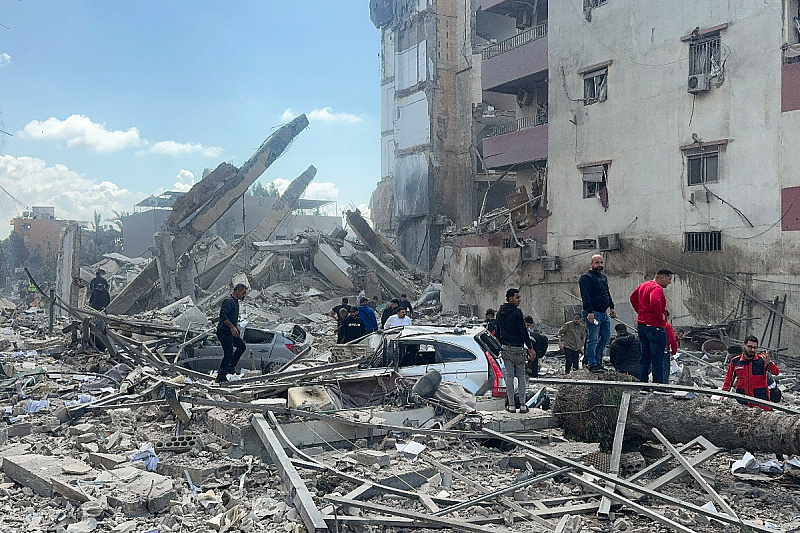
Ceasefires are typically based on documents that establish conditions, and CNN reports that it has not seen any version of a ceasefire text signed by both sides. Donald Trump and Abbas Araghchi mentioned a 10-point proposal, which the American leader described as a "usable basis for negotiations." The White House has not detailed what these 10 points consist of, although Iran's Supreme National Security Council has outlined key parts of the plan. The Iranian Embassy in India published an overview of the 10 points on its verified X account, which included a "cessation of war on all fronts, including against the heroic Islamic resistance of Lebanon (Hezbollah)." Pakistani Prime Minister Shehbaz Sharif, who presented the ceasefire plan to Trump, also said this morning that the ceasefire includes Lebanon, although Israel stated that this is not the case. Trump described the continuation of Israeli attacks on Lebanon as a "separate engagement" with Hezbollah that is "not included" in the two-week ceasefire agreement. Iran has halted traffic through the Strait of Hormuz in response to Israeli attacks on Lebanon, reported the Iranian semi-official news agency linked to the Revolutionary Guard. The Fars news agency stated that two oil tankers passed through the strait this morning "after receiving permission from Iran," but that the passage of additional tankers has been "stopped" due to new Israeli attacks on Lebanon, which the Israeli military described as the fiercest bombardment to date. Iranian Foreign Minister Abbas Araghchi raised the issue of alleged "ceasefire violations in Iran and Lebanon" by Israel during a phone call with the commander of the Pakistani army, according to a statement from the Ministry of Foreign Affairs. Araghchi "expressed gratitude for the constructive and responsible role of the Pakistani government and its continuous and effective efforts to end the war and strengthen peace and security in the region," the statement said.
Society
A ceasefire in Lebanon could collapse: Iran has blocked Hormuz due to attacks, Trump claims Hezbollah is not part of the agreement.
The world breathed a sigh of relief after a ceasefire was declared in the U.S.-Israeli aggression against Iran, but intense Israeli attacks on Lebanon could potentially unravel everything, as the parties appear to have differing views on whether the ceasefire includes the conflict between Israel and Hezbollah.
ingestion