In its latest report, the IMF states that the economic damage from the war in the Middle East is already being felt, leading to reduced global growth forecasts for 2026. The Fund emphasizes that even a short-lived conflict would have negative consequences, while a prolonged war could cause serious global disruptions.
According to the central forecast, global growth could decline from last year's 3.4% to 3.1% in 2026, with inflation rising to 4.4%. However, in a more adverse scenario, with persistently high energy prices, growth could further slow to 2.5%, while inflation would increase to 5.4%.
The worst-case scenario, involving a prolonged and intense conflict and oil prices above $110 per barrel, would push the world to the brink of recession, with growth around 2%.
The IMF notes that the global economy has only grown below this level a few times since 1980, including during the 2008 global financial crisis and the COVID-19 pandemic in 2020.
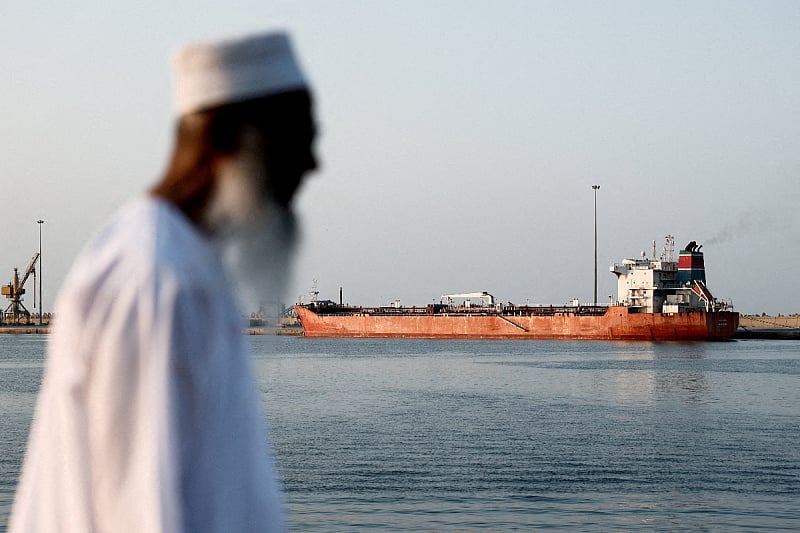
Additional pressure comes from energy markets. Oil prices exceeded $100 per barrel at the beginning of the week following stalled negotiations between Washington and Tehran and the U.S. blockade of the Strait of Hormuz, a key global oil transport route.
Although oil prices subsequently fell slightly, uncertainty continues to dominate the markets.
The IMF warns that developing countries and net energy importers will bear the brunt of the impact, while developed economies will also suffer consequences. The United Kingdom is particularly affected, with its growth forecast reduced to 0.8% and expected inflation rising to nearly 4%, the highest among G7 countries.
Additionally, the Fund slightly lowered the growth forecast for the United States to 2.3%, warning that the effects of the war are already impacting households through rising energy prices and living costs.
At the spring meetings of the IMF and World Bank in Washington, global financial leaders discussed possible responses to the crisis. British Finance Minister Rachel Reeves called for a coordinated international response, emphasizing the need for targeted economic support and protecting citizens from rising costs.
The IMF's chief economist, Pierre-Olivier Gourinchas, warned that some damage has already been done, despite occasional signals of a potential de-escalation of the conflict.
The Fund's conclusion is clear: the best way to prevent a deeper global economic crisis is a swift end to the conflict.