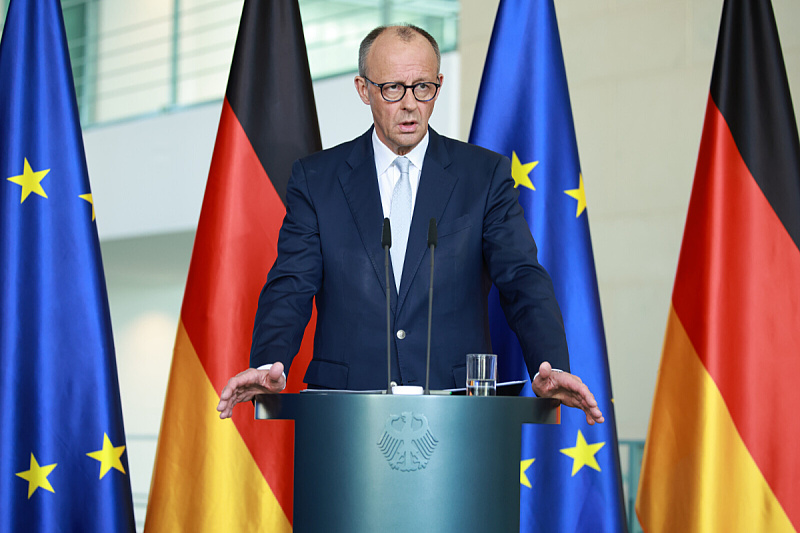
Speaking to reporters, Merz also said that Germany is resuming negotiations with Iran in coordination with Washington and European allies, to help end the war that has claimed thousands of lives and triggered an energy crisis affecting Germany as well.
The war has placed significant pressure on NATO, an alliance already on shaky ground due to the war in Ukraine and other issues. Trump has repeatedly called the alliance a "paper tiger" and in recent weeks threatened to withdraw from NATO.
NATO Secretary-General Mark Rutte has conveyed to some capitals that Trump wants concrete commitments in the coming days regarding the security of the Strait of Hormuz, two European diplomats told Reuters on Thursday.
"We do not want, I do not want, NATO to fall apart. NATO is the guarantor of our security, including and above all in Europe," Merz said in Berlin.
He added that in a phone call on Wednesday, he encouraged Trump to urgently continue negotiations with Iran. Merz said he told Trump that Germany is ready to help secure the Strait of Hormuz, a key trade route whose near-total closure has caused a global energy crisis, following an agreement on a long-term ceasefire.
However, Germany would need an international mandate for that, ideally from the UN Security Council, as well as a decision from the German parliament, he said.
"The American president is well aware of this, and therefore no decisions are expected from us in the coming days," Merz said, adding that Trump respects Germany's position.
Germany has resumed direct negotiations with Iranian leadership in Tehran, "after a long period of silence," Merz said.
"Our goal in this is also to contribute our own part to the success of the upcoming negotiations," he stated.
Merz said he will also speak with the Prime Minister of Pakistan later on Thursday, whose country will host ceasefire negotiations between Iran and the U.S. this weekend. Merz said he and Trump did not discuss a possible withdrawal of U.S. troops from Germany, nor Germany imposing restrictions on the operations of American bases that have been stationed there since World War II.
Earlier this week, Trump threatened to destroy "the entire civilization" of Iran if it does not unblock the Strait of Hormuz, which drew criticism in some circles, including among allies in Europe.
"I firmly believe that would not happen. It was part of his strategy toward Iran, and now it has led at least to a temporary cessation of hostilities and a temporary reduction in mutual rhetoric," Merz said.