The chances of reaching a partial agreement in the next 48 hours are slim. However, this final attempt is the only opportunity to prevent a dramatic escalation of the war, which would involve massive strikes on Iranian civilian infrastructure and retaliation against energy and water facilities in Gulf states.
The 10-day deadline given by U.S. President Donald Trump to Iran was set to expire on Monday evening. However, on Sunday, Trump extended the deadline by 20 hours and announced a new deadline on Truth Social, specifically Tuesday at 8 PM Eastern Time.
On Sunday, Trump told Axios that the United States is in deep negotiations with Iran and that an agreement could be reached before the Tuesday deadline. "There is a good chance, but if they don’t reach a deal, I’ll blow everything up there," he said.
Trump threatened to destroy infrastructure vital to Iranian civilians if he fails to reach an agreement with the regime. Such attacks could constitute war crimes, and Iran has threatened retaliation with attacks on infrastructure in Israel and Gulf states.
An operational plan for a massive U.S.-Israeli bomber campaign against Iranian energy facilities is ready for execution, but it has been emphasized that the extension of Trump’s deadline aimed to provide a final opportunity to reach an agreement.
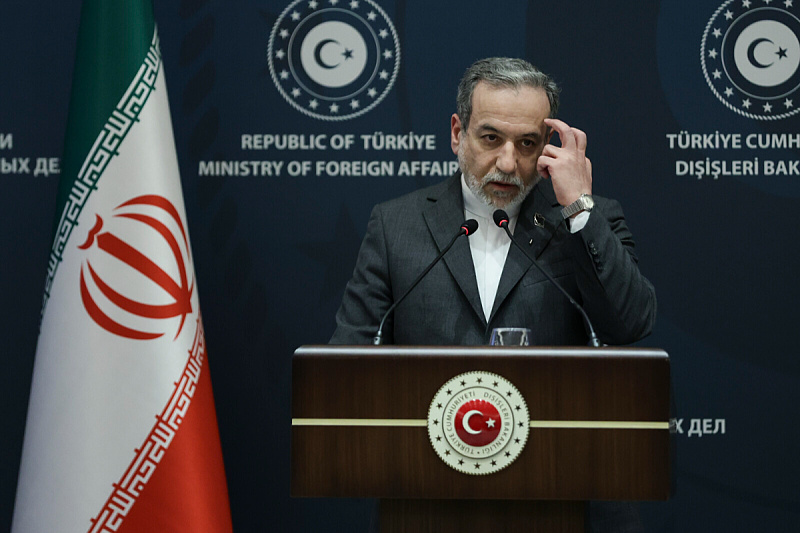
Negotiations are being conducted through Pakistani, Egyptian, and Turkish mediators, as well as via messages exchanged between Trump’s envoy Steve Witkoff and Iranian Foreign Minister Abbas Araghchi.
In recent days, the Trump administration has presented several proposals to Iran, but Iranian officials have not yet accepted them.
On the other hand, mediators from both sides are considering the terms of a two-step agreement; the first phase would be a potential 45-day ceasefire during which negotiations for a permanent end to the war would take place. The ceasefire could be extended if more time is needed for negotiations.
The second phase would be an agreement to end the war. Mediators believe that a full reopening of the Strait of Hormuz and a resolution for Iran’s highly enriched uranium, either by removing it from the country or diluting it, could only result from a final agreement.
Mediators are working on confidence-building measures that Iran could take regarding the reopening of the Strait of Hormuz and its stockpiles of highly enriched uranium.
These two issues are Iran’s main negotiating chips, and Iranians will not agree to fully relinquish them for just a 45-day ceasefire, Axios reports.
Mediators want to see if Iran could take partial steps on both issues in the first phase of the agreement. They are also working on steps the Trump administration could take to provide Iran with guarantees that the ceasefire will not be temporary and that the war will not resume.
Iranian officials have clearly communicated to mediators that they do not want to be put in a situation like Gaza or Lebanon, where there is a ceasefire on paper, but the United States and Israel can attack again whenever they want.
Mediators are also working on additional confidence-building measures that the U.S. could take to address some of Iran’s demands.