U.S. President Donald Trump previously stated that in his address to the nation, he would reiterate his serious consideration of the U.S. withdrawing from NATO, a point he had already emphasized in an interview with the British newspaper Daily Telegraph, expressing dissatisfaction over the lack of support for a military response to Iran.
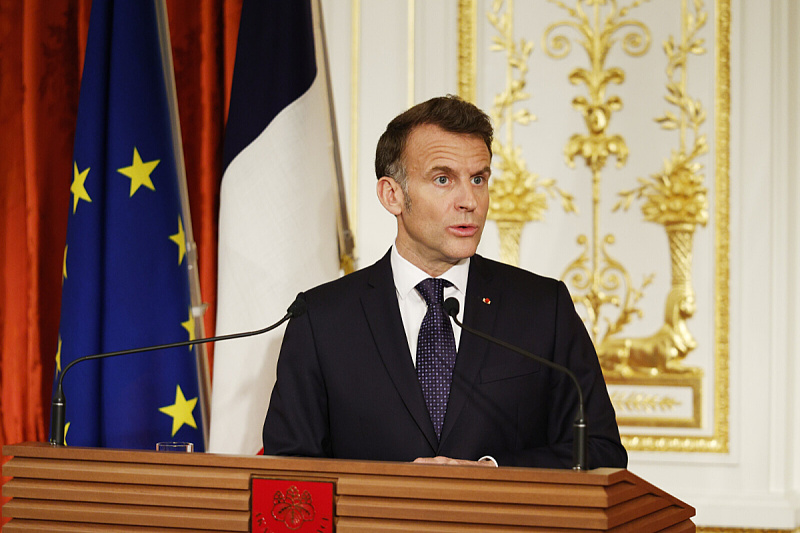
In response to Trump's demand, French President Emmanuel Macron proposed a United Nations framework for any actions in the Strait of Hormuz, a crucial route for global oil shipments that Iran has effectively blocked.
According to his stance, international efforts can only proceed once hostilities have calmed, after consulting with insurance and shipping companies and obtaining Iran's consent.
"Let's recall what NATO is. It is a military alliance concerned with the security of the Euro-Atlantic area. It was not designed to conduct operations in the Strait of Hormuz, as that would violate international law," stated Defense Secretary Alice Rufo.
She explained that Paris instead advocates for a plan to restore transit and "freedom of navigation" through means of a "non-offensive nature."
"I understand that irritation, but I am not speaking on behalf of the United States," said Rufo. "I am speaking on behalf of a country that is a founding member of the North Atlantic Treaty Organization (NATO) and a founding member of the European Union, and which has been saying for 20 years that Europeans must take on a greater share of responsibility for collective defense in Europe," she added.
Tensions further escalated after, according to three unnamed sources, France refused to allow Israel to use its airspace to transport American weapons for the war in Iran, which sparked Trump's dissatisfaction.