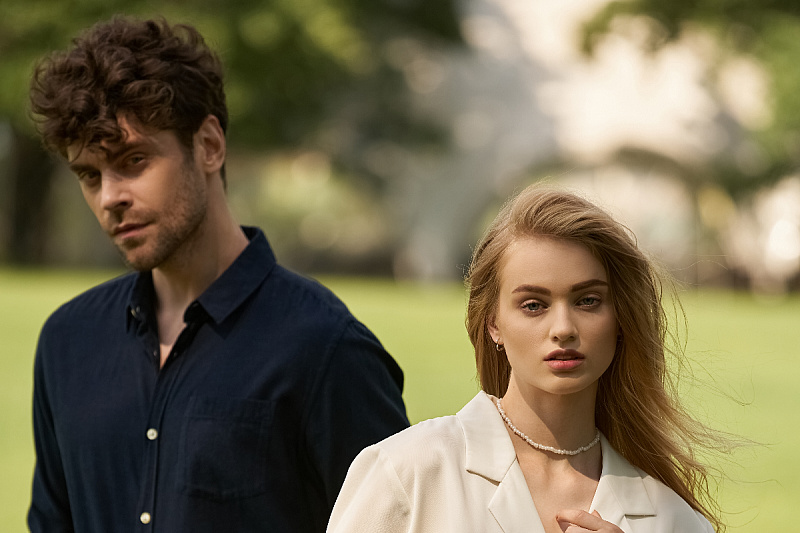
Instead of conspicuous brand displays, the focus has shifted toward subtlety and aesthetics, now recognized by those in the know as "quiet luxury," which is increasingly flooding social media.
This change did not happen overnight. In the era of social media, where luxury was often reduced to a single Instagram post, a need for authenticity and a distancing from excessive displays of status emerged.
This is also evidenced by the transformation of major fashion houses. Gucci, once synonymous with maximalism and bold logos, has undergone significant changes in recent years under the leadership of Alessandro Michele. During Sabato De Sarno's brief tenure, a shift toward minimizing logos began, and today, under the creative direction of Demna Gvasalia, the luxury brand continues with more sophisticated pieces.
To a lesser extent, a shift has also been observed at Louis Vuitton, whose monogram is one of the most recognizable luxury symbols in the world. Louis Vuitton is increasingly adapting its collections to cut, materials, and design, rather than relying on visible logos.
Burberry, another brand synonymous with prominently displayed logos, has been undergoing a process of calming its identity in recent years. The focus is returning to superior tailoring and timeless pieces, such as trench coats, which do not require branding to be recognized.
These brands, synonymous with luxury, confirm the growing trend of minimalism and quiet luxury. Neutral colors and discreet branding are becoming the focus of their aesthetics. In this context, luxury is no longer about immediate recognition but is instead identified through quality and subtlety. TikTok trends, such as "old money" or "quiet luxury," promote wardrobe choices without flashy logos, thereby bringing the trend closer to younger generations.
As Forbes notes, quiet luxury is not just a passing trend but a reflection of a broader economic and social context in which luxury is increasingly less displayed and more recognized.
"In a world where everything is visible and accessible, luxury is increasingly retreating into silence. Once-unavoidable logos, which for decades served as clear signals of status, are losing importance today. Instead of flashy monograms and branded pieces, the focus is shifting toward subtlety, quality, and aesthetics recognized only by those in the know. Thus, quiet luxury is no longer a passing trend—it is becoming the new standard," it states.
However, as is often the case with trends, this one has not been without criticism. Minimalism and "quiet luxury" are easily copied and commercialized, which directly raises the question of whether luxury is losing its exclusivity as a result.
Some analysts believe that excessive restraint can lead to monotony, but also to the creation of an entirely new form of elitism—one that is less visible but equally present.
While logos were once proof of status, today their absence can signify the opposite. In a time when everyone can show what they wear, true luxury becomes something that cannot be proven.