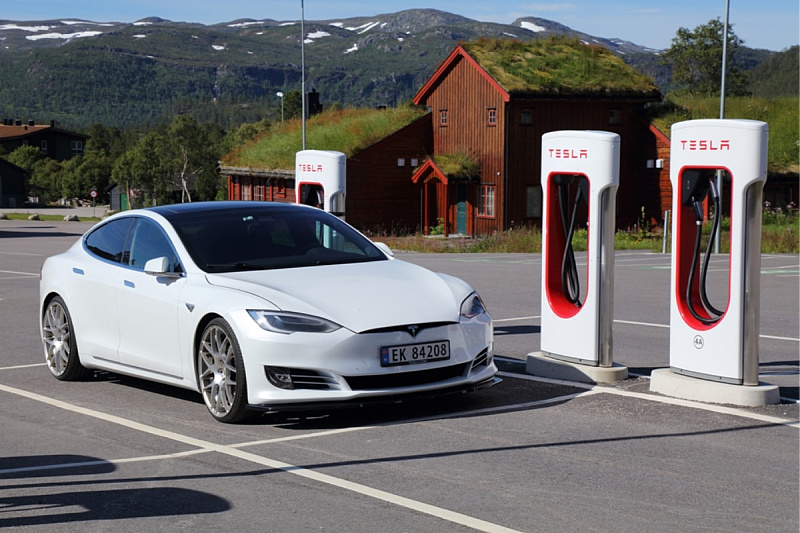
Such specimens still command a higher price in the used car market today, and many owners have not rushed to sell precisely because of this advantage. One resident of Oslo decided to leverage this logic and specifically search for such a car. On a Norwegian auction platform, he came across a 2014 Model S, which he assumed—without verification—belonged to that privileged category. He bid 145,000 kroner (about 13,000 euros), no one outbid that offer, and he thus formally became the buyer.
The problem surfaced immediately afterward. It turned out that the vehicle in question never had a free charging package—it was an ordinary model requiring payment like any other Tesla. Disappointed, the man attempted to cancel the agreement, claiming the car did not meet his expectations.
The seller did not agree and filed a complaint with the Norwegian consumer protection authority. The car was subsequently sold to another buyer in a new auction, but this time for only 115,000 kroner (about 10,250 euros).
Here, Norwegian law comes into play, which clearly stipulates: verbal or electronic consent to a purchase carries legal weight; a signature on a contract is not a necessary condition. Anyone who backs out of an agreed purchase, and if the vehicle is consequently sold at a lower price, is obligated to compensate the original seller for that difference.
The board rejected all of the buyer's arguments. No defects were found in the vehicle that would justify withdrawal, and the key point was clear: nowhere in the listing did it state that the car had free charging. That was solely the buyer's assumption, and he alone bears responsibility for its consequences.
In the end, the board made a decision that proved costly for the man from Oslo. He had to compensate the seller for the 30,000 kroner difference between the two auctions (about 2,750 euros), pay the auction house a cancellation fee of 1,500 kroner (135 euros), and on top of that, administrative processing costs along with default interest amounting to another approximately 715 euros. Including minor commissions and fees, the total sum rose to about 3,575 euros.
Norwegian journalists put this amount into an interesting context: at the average electricity price in Oslo, that money would be quite sufficient to power this Tesla for nearly 175,000 kilometers of driving. For many people, that is the entire lifespan of a car.