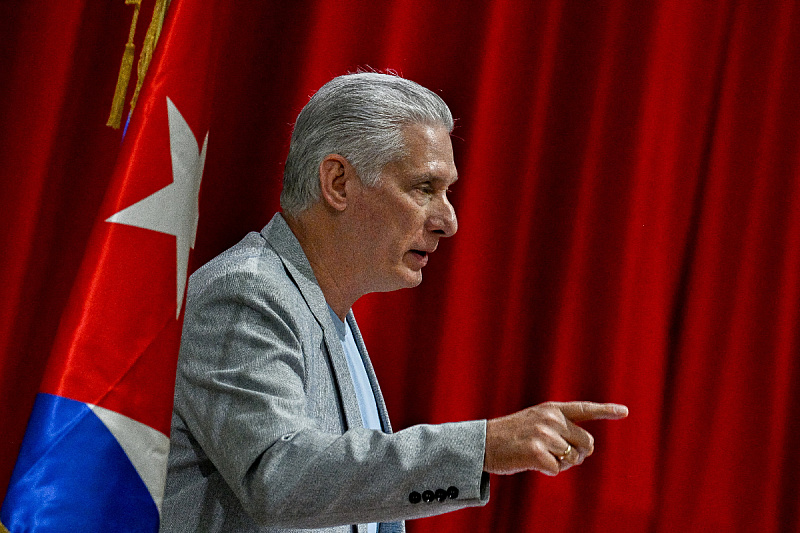
In an extensive interview for NBC News on "Meet the Press," moderated by Kristen Welker in Havana, Miguel Díaz-Canel rejected the need for changes to Cuba's political system despite pressure from the administration of President Donald Trump. He emphasized that "there is no justification for the United States to launch a military aggression against Cuba" and warned that any invasion would have consequences for the security of his country, the U.S., and the entire region.
"An invasion of Cuba would have its price. It would affect the security of Cuba, the United States, and the region. If it happens, there will be fighting and there will be conflict, we will defend ourselves, and if we must die, we will die, because as our anthem says, 'To die for the homeland is to live,'" said Díaz-Canel.
When asked by Kristen Welker if he was prepared to respond to "key demands" from the U.S., including the release of political prisoners, the holding of multiparty elections, and the recognition of unions and free media, Díaz-Canel said Cuba had not received such demands and that matters concerning the political system and constitutional order "are not subject to negotiation with the United States."
On the other hand, Díaz-Canel did not commit to releasing prisoners and denied that these were political cases, claiming that there are people in the country who are not in favor of the revolution and "express themselves daily" without being imprisoned for it.
"This story that has been created, this image that every person who speaks against the revolution is immediately thrown in prison, is a big lie, a slander, and part of a construct meant to tarnish and destroy the reputation of the Cuban revolution," said Díaz-Canel.
Explaining the difficult situation in the country, Díaz-Canel repeatedly blamed the 67-year-old U.S. economic embargo for problems such as the electricity crisis, shortages, and widespread poverty. He recalled that the embargo was imposed in 1962 after Fidel Castro nationalized American companies and assets following the 1959 revolution.