At the beginning, Krišto emphasized that according to the agenda proposal, more than 20 items were related to regulations. "The proposed regulations are not fully aligned with current laws, nor are they standardized in terms of criteria, particularly regarding professional qualifications and the status of civil servants—from professional associates to higher positions. Therefore, I want to highlight that a quality discussion was held, and we reached a conclusion tasking the Ministry of Justice and the Legislative Office, together with the relevant ministries, to make corrections in accordance with the remarks presented today. The goal is to be able to express our stance on these regulations at one of the upcoming sessions of the Council of Ministers. I believe they are certainly necessary," said Krišto. She added that many institutions have not updated their regulations for years and that this is essential. "I want to inform the public that we also dedicated considerable time to issues not directly on the agenda, particularly the adoption of the global fiscal framework and the budget of BiH institutions for 2026. This is an urgent obligation for the functioning of institutions and the status of employees. I have initiated a request to the Minister of Finance, Mr. Amidžić, to consider possibilities for mitigating the consequences of economic disruptions. The minister has received this information, and I hope he will consider it," she emphasized. Krišto mentioned that discussions were also held regarding the problems of BHRT and the issue of professional drivers' transportation within the initiative, specifically Directive 90/180. She added that she also discussed the issue of transporters with Croatian Prime Minister Andrej Plenković. "I want to say that we have received a response from Croatia, and Croatia has made it clear, as I have previously pointed out, that this issue is not bilateral, that we cannot resolve it in the relationship between Bosnia and Herzegovina and Croatia. This is a regional issue, and of course, Croatia, as an EU member, is bound by EU directives and cannot change them unilaterally; it must apply them. However, in yesterday's conversation, we also tried to ask the Croatian Prime Minister, and they have an idea to explore, but in any case, this must be done through legislative changes in the Croatian Government and Parliament. There is an idea to amend the law on foreigners so that, in this way, a solution might be found to enable such companies to register a branch in the Republic of Croatia, which would then apply to the competent authority in the Republic of Croatia for issuing some kind of residence visa or work permit. We will see how the law regulates this," she emphasized.
Society
Krišto: I spoke with Plenković about the carrier issue; this is a regional problem, but there is an idea
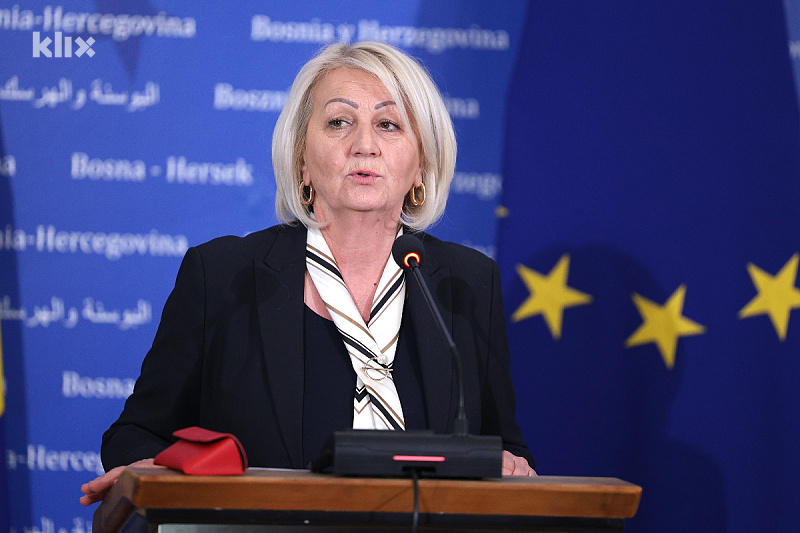
The Chairperson of the Council of Ministers of Bosnia and Herzegovina, Borjana Krišto, stated that today's session was substantive and that quality discussions were conducted.
ingestion