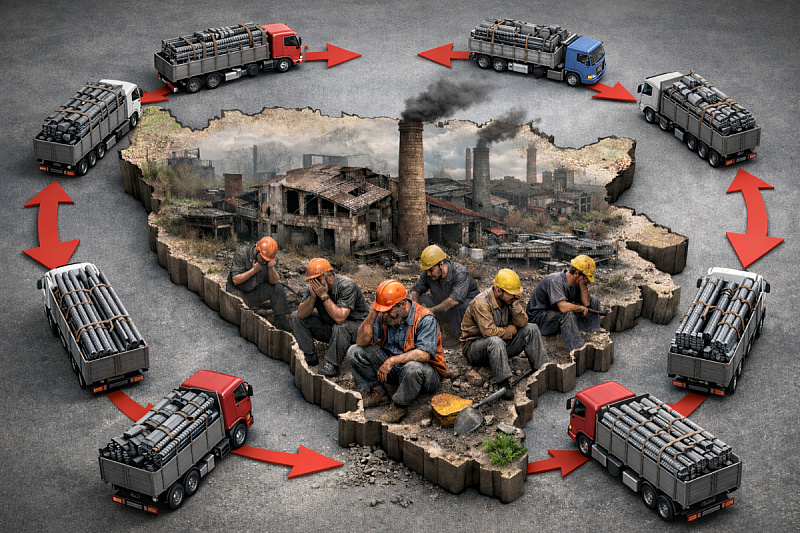
The Council of Ministers of Bosnia and Herzegovina did not adopt the proposed measures to restrict the import of steel and iron, which aimed to protect domestic production and preserve jobs in the industry. Ministers from the HDZ BiH voted against this proposal, preventing the necessary majority for its adoption.
The cited reason is a commitment to market principles and avoiding administrative restrictions that could affect trade freedom and relations with international partners.
However, data shows that steel imports into BiH have significantly increased in recent years.
On the other hand, the list of 28 companies that opposed import restrictions includes firms with between three and 308 employees (2023 data), among which are companies from Herzegovina, as well as Turkish firms engaged in highway construction through BiH.
This decision comes at a time when data indicates an almost balanced ratio of imports and exports of steel and iron in BiH, but also significant differences in structure and price.
Over the past five years, steel, iron, and products made from them worth 7.41 billion KM were imported, while exports amounted to about 7.3 billion KM. Of the total imports, 4.41 billion KM relates to steel and iron, while exports of raw steel and iron amounted to about 2.5 billion KM.
Imported steel and iron are on average up to 50 percent more expensive than those exported from BiH, while in 2022 they were even twice as expensive.
Data shows that a significant portion of the steel and iron import market in BiH is held by a small number of companies, while increasingly pronounced global economic disruptions and growing dependence on imports of key raw materials further emphasize the need to preserve the domestic industry.
Simultaneously, government moves are not heading in that direction. The closure of mines and coke plants has already occurred without serious reaction, and increasingly loud warnings suggest a similar scenario could befall the Zenica Ironworks. In that case, a chain reaction would impact the entire sector, including the Railways of the Federation of BiH and Republika Srpska, while thousands of workers could lose their jobs due to the interests of a small number of companies close to centers of power.