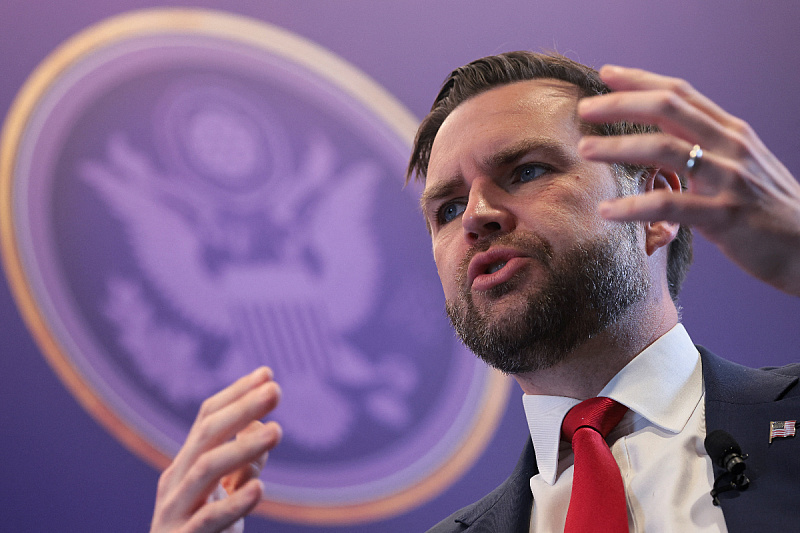
However, he issued a sharp warning that U.S. President Donald Trump has no patience and that it is "not worth playing games" with him. Speaking at an event in Budapest, where he traveled to show support for Hungarian Prime Minister Viktor Orbán ahead of Sunday’s parliamentary elections, Vance emphasized that a deal is possible if Iran negotiates sincerely.
"The U.S. president told me, as well as the entire negotiating team, the Secretary of State, and special envoy Steve Witkoff, to go and work in good faith to reach an agreement," Vance stated. He added that Trump is very "impatient for progress to be made."
"I think if the Iranians are willing to cooperate with us in good faith, we can find an agreement. But that’s a big 'if,' and ultimately it’s up to the Iranians how they negotiate. I hope they make the right decision. If they don’t come to the negotiating table with good intentions, they will find out that the U.S. president is not someone to play games with," warned the U.S. vice president.
Six Weeks of War and the Threat of "Civilizational Destruction" After more than a month of devastating war that has claimed thousands of lives, spread across the Middle East, and caused unprecedented disruptions to global energy supplies, the U.S. and Iran agreed to a two-week ceasefire mediated by Pakistan late Tuesday night.
Trump announced the deal late Tuesday, just two hours before the expiration of an ultimatum he had issued to Iran: either unblock the Strait of Hormuz or face the destruction of "their entire civilization." Under the terms of the ceasefire, Iran agreed to halt its blockade of oil and gas passing through this critical strait.
Pakistani Prime Minister Shehbaz Sharif announced that he has invited Iranian and American delegations to a meeting in Islamabad, scheduled for Friday.
Iranian Foreign Minister Abbas Araqchi confirmed in a statement that Tehran will suspend counterattacks and ensure safe passage through the strait—provided attacks on Iran cease. On the other hand, Tehran warned that the war is not over until formal terms for a long-term peace are agreed upon.
Who Is the Winner, and Who Is Lying? Although fighting has temporarily halted, both sides claim to have emerged as winners. Iran’s Supreme National Security Council declared the agreement a victory for Tehran, asserting that Trump accepted their terms. The White House, in contrast, speaks of an American victory that opens a diplomatic path to peace. According to Vance, Trump noted that "Iranians are better at negotiating than fighting."
Vance described the ceasefire as "fragile," emphasizing that there are different factions within the Iranian system.
"On one hand, you have people in Iran who reacted very positively, and on the other hand, you have those within their system who are lying on social media about what we militarily achieved and lying about the very nature of this ceasefire," Vance explained.
Finally, he sent a clear message to the leadership in Tehran, stressing that the U.S. still holds "clear military, diplomatic, and perhaps most importantly, significant economic leverage."
"If Tehran lies, cheats, and tries to destroy this fragile ceasefire, the people of the Islamic Republic will not be happy," Vance concluded.