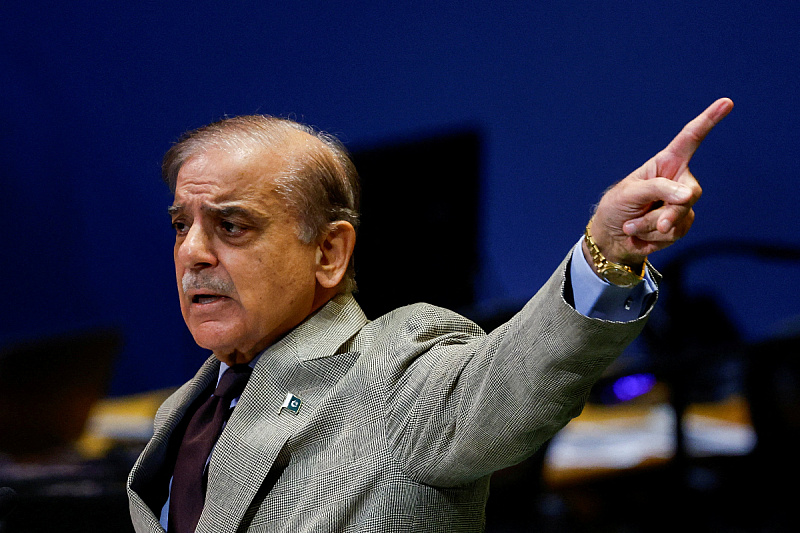
Pakistan has thus brought to the negotiating table two countries that, in the past month alone, besides exchanging thousands of rockets and drones, have also traded threats of "total annihilation" and "erasing civilizations." In statements by U.S. President Donald Trump and Iranian Foreign Minister Abbas Araghchi, Sharif stands out as a key player in the negotiations and the person who successfully brought the conflicting parties to a ceasefire agreement. Behind Sharif lies a turbulent past, having come a long way from being a local politician in 1988 to someone who managed to bring Americans and Iranians to the negotiating table. A particularly interesting part of his political career relates to the period from 2000 to 2007, when he and his family lived in exile in Saudi Arabia following a coup in his home country. His departure from the country, where he had been involved in politics for 12 years at that point, was prompted by allegations, based on a single report, that he allowed the murder of a person in the Punjab region, after which he was arrested. Upon release from prison, Sharif left Pakistan with his family and returned seven years later. A year after his return, he became the Prime Minister of Punjab province, and in 2018, he became the opposition leader after an unsuccessful candidacy for the country's prime minister. However, in 2022, he leveraged a constitutional crisis and the ousting of Imran Khan to become Pakistan's Prime Minister after more than 30 years in politics. Although his tenure was short, lasting only until 2023, he returned to the position of national leader in 2024. A special focus of Sharif's foreign policy has been on building relationships with all major players, primarily in the Middle East region. Notable achievements include reaching agreements with Saudi Arabia and organizing numerous visits and summits with leaders from Turkey, the United Arab Emirates, Jordan, and other countries. In this context, it is also important to mention that in 2025, the conflict between India and Pakistan escalated, with the United States acting as one of the mediators, leading to intensified relations between Washington and Islamabad. This opened the door for Sharif to position himself as a mediator between the U.S. and Iran and, through diplomatic efforts, secure a two-week ceasefire. In announcing the ceasefire, Sharif immediately declared the start of negotiations for a complete cessation of hostilities. It is clear that Pakistan, especially in the event of a comprehensive ceasefire, will be identified as a key player in ending the conflict.