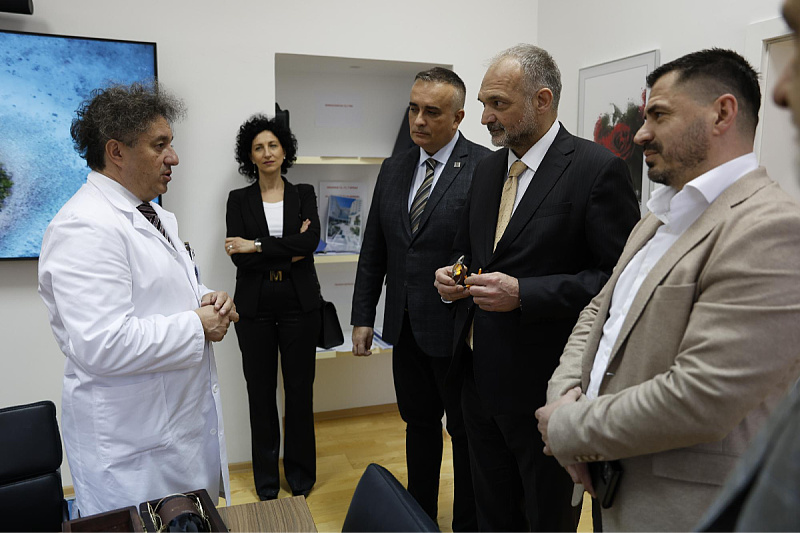
Discussion focused on enhancing cooperation and exchanging experiences both in areas with good results and on issues that remain challenging for both healthcare systems.
The director of KCUS emphasized that such meetings have concrete value because they allow for the exchange of solutions already tested in practice, particularly in fields requiring a high level of organization and expertise, such as transplant medicine.
The director of the Clinical Center of Montenegro believes it is especially important to see how reorganization and investments improve working and treatment conditions, "as these are issues we also face and are working on intensively."
The meeting also opened topics on the daily functioning of healthcare institutions—primarily the shortage of medical staff, problems in procuring certain cytostatics, and waiting lists for specific examinations and diagnostic procedures. The shared assessment is that these are complex issues without quick and simple solutions.
The delegation from Montenegro visited facilities in the final stages of renovation, which will soon house four clinics. This move relocates these clinics from existing, outdated, and inadequate buildings to a central building where previously unused floors have been renovated and put into operation, thereby improving conditions for patients and staff.
In the delegation from the Clinical Center of Montenegro, besides Director Radović, were Medical Director Dr. Đorđije Krnjević, Head of IT Services Armin Muhović, Head of Human Resources Sanja Vojinović, Dr. Nikola Milašević, and associate Stojan Vuletić.
Representing KCUS at the meetings were Prof. Dr. Alen Džubur, Director of Internal Medicine Disciplines; Prof. Dr. Sabina Prevljak, Director of Diagnostic Disciplines; Prof. Dr. Nermir Granov, Director of Surgical Disciplines; Amir Mavraković, Director of the Professional Non-Medical Discipline; Prof. Dr. Sanko Pandur, Director of the Discipline for Science and Development at KCUS; and Dr. Mirela Imširija, a graduate architect.