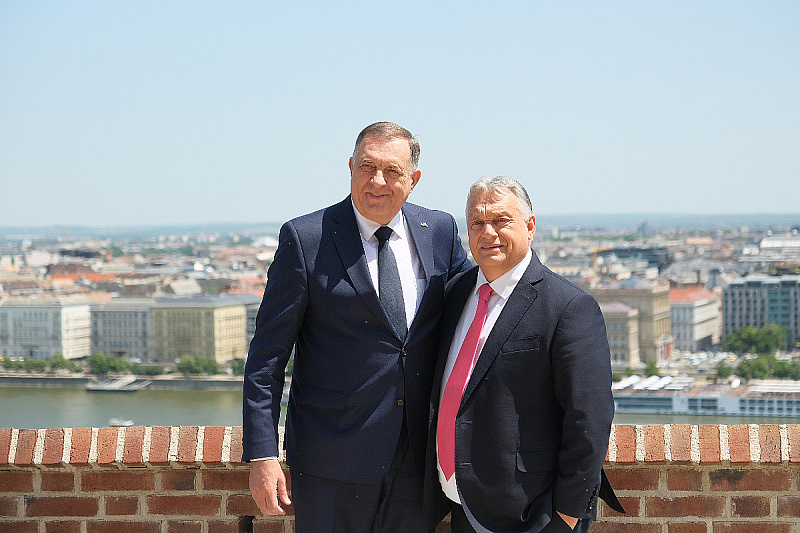
In recent years, Dodik has been intensively building a special relationship with Orbán, recognizing him as his strongest anchor within the European Union. In doing so, Dodik sought to build some form of legitimacy to justify his policies.
From Orbán, he received moral, political, and financial support or loans. At least, that was the case until now. However, as of yesterday, Orbán is stepping down, at least into temporary political obscurity. He was convincingly defeated by the former opposition leader Péter Magyar. And unlike Orbán, Magyar will definitely not keep Dodik at the top of the Hungarian region's priorities.
Why will Orbán's defeat affect Dodik's position?
In the past period, Orbán was one of the few leaders within the European Union who openly provided political support to Dodik, especially during times of increased pressure from Brussels and Washington. Such a relationship also carried concrete weight. Hungary has on multiple occasions softened or blocked attempts at a stricter institutional approach toward the authorities in Republika Srpska.
Now, with Magyar coming to power, Dodik cannot expect such treatment. The new political structure in Hungary is expected to align more closely with the dominant stances within the European Union, which will open the door for a more unified approach toward Bosnia and Herzegovina, including potentially strengthening sanctions in case of continued destructive policies, particularly on Bosnia and Herzegovina's path toward the European Union or political pressures. This leaves Dodik without one of his key allies within European institutions.
Beyond the political aspect, the economic dimension of the relationship is also significant. Hungary had previously expressed readiness to support certain projects and financial arrangements in Republika Srpska. The new government could reconsider such practices and focus on standard European Union procedures and policies, further reducing the maneuvering space for the authorities in Republika Srpska.
The broader context of the political narrative is also important. Orbán and Dodik share a similar approach when it comes to relations with the European Union and the issue of sovereignty.
The weakening of such a political model within the EU itself could further isolate actors who rely on similar rhetoric, including the authorities in Republika Srpska.
Although Orbán's defeat will not automatically produce immediate changes in Bosnia and Herzegovina, it will significantly affect the political environment in which Dodik operates. Ultimately, Magyar's victory could encourage and inspire other political actors, and in any case, demotivate those who have pursued destructive policies.