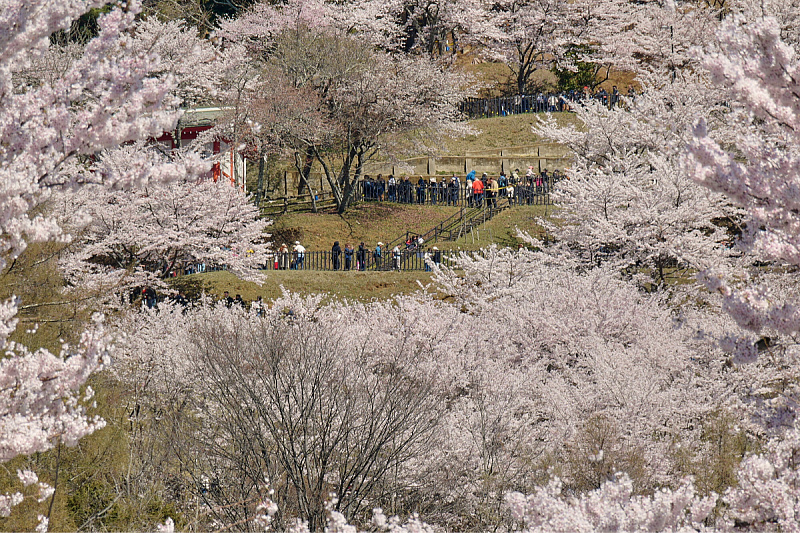
Complaints were not long in coming: chronic traffic jams, piles of garbage, ill-mannered foreigners knocking on the doors of private homes to use the toilet, and even tourists relieving themselves in others' yards. The situation has become so dire that officials in Fujiyoshida announced in February they are canceling this year's traditional cherry blossom festival, which was launched about a decade ago precisely to promote tourism. What residents call "tourism pollution" has exposed a broader problem facing Japan: as economic stagnation deepens, authorities eagerly await the financial boost from more tourists, while local communities remain completely unprepared for what the influx of foreign visitors means for their daily lives. "This is, above all, an ordinary residential area where it has become difficult to balance tourism with the environmental safety of residents," said Masatoshi Hada, head of the Economy and Environment Department in Fujiyoshida, to the AP agency. "We decided not to promote a festival that would attract even more visitors." Even without the festival, foreign tourists flooded the area on a sunny day in early April, when the cherry blossoms were in full bloom. Streets leading to the popular Arakurayama Sengen Park were congested, as visitors queued up to capture the world-famous panoramic view. In recent years, the number of foreign tourists in this part of the city has exceeded 10,000 daily, which, as the city stated in a February announcement, "has threatened the daily lives of residents." The problem of overtourism is also visible in other popular destinations in Japan, such as Kyoto and Kamakura. In Kyoto, residents complain about tourists with large suitcases blocking city buses. "Tourism pollution" comes at a time when Japan is facing a rapid increase in foreign workers imported due to its aging and shrinking domestic population. This combination has also led to a rise in xenophobia, and the nationalist government of Prime Minister Sanae Takaichi is proposing stricter rules for foreigners. While promising to address the issue of excessive tourism, the government simultaneously aims to increase the current level of 40 million foreign visitors to 60 million by 2030. From April 1, at the start of the cherry blossom season in this region, Fujiyoshida has increased the number of security guards and restricted tourist buses and vehicles from entering the picturesque neighborhood, requiring visitors to walk to the park. On a bench in front of his house, just a few blocks away, 93-year-old Hitoshi Mori says the large number of visitors is "good but irritating." "It's too crowded outside, so I can only go shopping once a week and have to stock up," he says. Tourists, on the other hand, are thrilled by the spectacular views, despite the growing number of signs urging them to behave more politely. Lines to reach the most sought-after viewpoints stretch for hours. "It's quite well-organized. When they let you in, you have about five minutes to take as many photos as possible, and it was fantastic," says Lisa Goerdert from Paris. Vicky Tran, who came with family and friends from Melbourne, Australia, says they couldn't make it all the way to the pagoda with views of Mount Fuji and cherry trees because there were too many people. Still, she adds that she enjoyed the view and the neighborhood. Overtourism has deepened divisions among residents—between those who want peace and those who have seized the opportunity to start businesses, renting out their yards as parking lots or opening new shops and food stalls. In a nearby shopping street, where many family-owned shops had once closed, business has revived after another social media photo of Mount Fuji rising above the street went viral. Crowds of tourists stand in the middle of the road to capture a shot of Mount Fuji, often blocking traffic as frustrated drivers honk. The sudden influx of visitors is a huge shock "for people like us who are used to a quiet suburban life," says Masami Nakamura, who runs a decades-old school uniform shop with her husband. "I just hope tourists will respect our rules and customs." The crowds are a significant change even for those whose businesses have flourished because of them.
Society
A Japanese town at the foot of Mount Fuji is flooded with tourists, lining up for the best photo opportunity.
Social media has been flooded with stunning photos of Mount Fuji's snow-capped peak above a red pagoda and the fleeting cherry blossoms heralding the arrival of spring, while tourists seeking the same shot have overwhelmed the tranquil town of Fujiyoshida.
ingestion