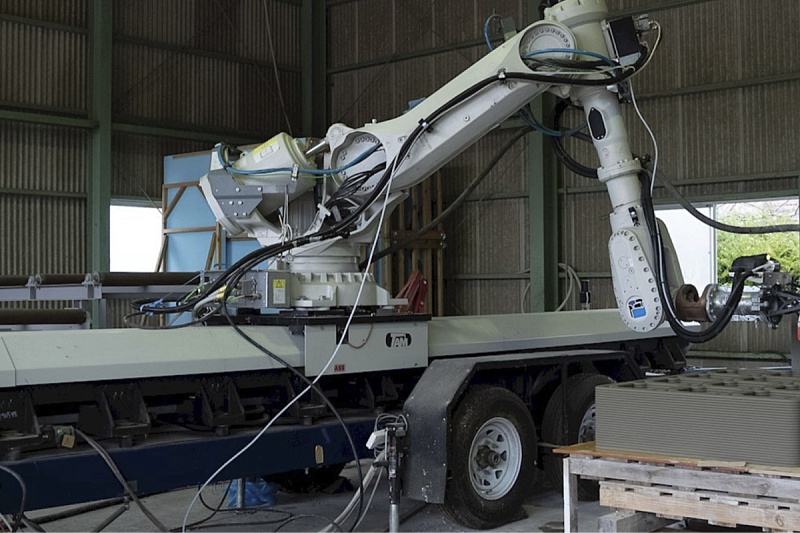
The project was completed in collaboration between construction company Serendix and West Japan Railway Company (JR West), demonstrating how robotics and 3D printing can significantly reduce construction time and infrastructure operation disruptions. The railway station building was created using 3D-printed structural components produced off-site and then transported to the construction site for assembly. ABB’s industrial robot played a key role in printing structural elements with high precision before the parts were assembled on-site. The building was assembled in one night after the last train departed and was ready before morning traffic resumed. This approach allowed construction to proceed without interrupting railway services, which is typically a major challenge for infrastructure upgrades. According to ABB, robotic automation and off-site production helped dramatically reduce construction time and labor requirements compared to traditional construction methods. "This project demonstrates how robotics and automation can transform construction by reducing time, costs, and disruptions while improving precision and safety," ABB stated in a release. Traditional railway station construction can take several months and requires extensive on-site labor and planning. In contrast, the 3D-printed station components were produced off-site and quickly assembled using robots. ABB’s robotic technology enabled high-precision 3D printing of structural components, reducing construction errors and improving overall efficiency. The project also showed how robotic construction methods can help address labor shortages and rising construction costs. The use of robotics in construction is becoming increasingly important as industries seek ways to improve efficiency, reduce waste, and shorten project timelines. Automation also enables the completion of construction projects in locations where traditional methods may be difficult or time-consuming. ABB noted that robotic construction could open new possibilities for infrastructure development, especially for projects that must be completed quickly or in areas where construction time must be minimized. The project highlights a broader trend in which robotics and automation are expanding beyond manufacturing into sectors such as construction, logistics, and infrastructure development. "Automation and robotics are opening new possibilities in construction and infrastructure projects where speed, precision, and safety are key," ABB stated. "The construction industry is seriously affected by rising labor and material costs, as well as a shortage of skilled workers. Our 3D printer-based construction approach can reduce labor costs and produce all construction material from mortar. By lowering labor and material costs, we believe this initiative can address the challenge of rising prices," said Sato, the operating director of Serendix. The successful completion of the 3D-printed railway station demonstrates how robotic construction can be used for future infrastructure projects such as small buildings, shelters, or transportation facilities.
Society
Japan: 3D printed railway station built overnight using ABB robots
ABB Ltd's automation technology helped build Japan's first 3D-printed railway station building, which was assembled overnight between the last train of the day and the first train the next morning.
ingestion