The region is highly seismically active, and earthquakes have claimed thousands of lives in recent years.
The epicenter of today's earthquake was in the Hindu Kush mountain range, about 150 kilometers east of the Afghan city of Kunduz, according to data from the Euro-Mediterranean Seismological Centre and the U.S. Geological Survey.
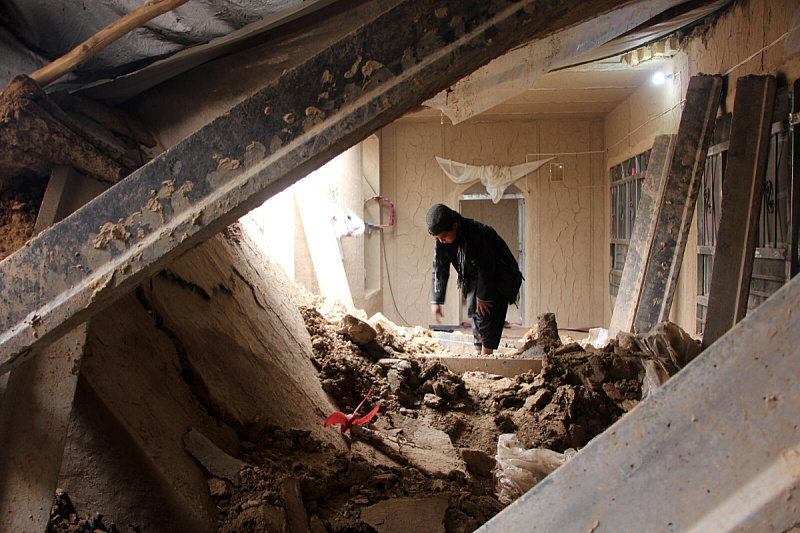
Hafizullah Basharat, a spokesperson for the Kabul police, said eight people were killed and one child was injured when a house collapsed on the outskirts of the capital. He stated that all the victims were members of the same family.
Kabul is located about 290 kilometers southwest of the epicenter. There were no immediate reports of damage or injuries from areas closer to the epicenter. It is a remote area, so it often takes several hours before local authorities can deliver information to Kabul.
Due to the epicenter's depth of more than 180 kilometers, the earthquake was felt across a wide area of Afghanistan and Pakistan. In Pakistan, it was recorded in the cities of Islamabad, Peshawar, Chitral, Swat, and Shangla, according to data from the Pakistan Meteorological Department. There were no immediate reports of damage or injuries in Pakistan.
Sharafat Zaman, a spokesperson for the Afghan Ministry of Health, said health authorities in Kabul and the provinces have been placed on alert.
Last August, a 6.0 magnitude earthquake that struck a remote mountainous area in eastern Afghanistan killed more than 2,200 people, flattening villages and trapping residents under rubble. The highest number of casualties was in Kunar province, where people mostly live in houses made of wood and unbaked bricks in steep valleys.
In November, a 6.3 magnitude earthquake hit Samangan province in northern Afghanistan, killing at least 27 people and injuring more than 950. Historical sites were also damaged, including the famous Blue Mosque in the city of Mazar-i-Sharif and the Bagh-e-Jahan Nama palace in Khulm.
On October 7, 2023, a 6.3 magnitude earthquake, followed by strong aftershocks, struck western Afghanistan and killed thousands of people.
Impoverished Afghanistan often faces difficulties in responding to natural disasters, especially in remote regions. Many houses in rural and isolated areas are built from unbaked bricks and wood, often of poor quality.