A senior White House official, who insisted on anonymity to discuss internal deliberations, told Defense News that no final decision has been made yet, and that the White House has not asked the Pentagon to develop specific plans to reduce troop numbers on the European continent.
The very fact that this option is being discussed indicates how much relations between Washington and European NATO allies have deteriorated in recent months. NATO Secretary General Mark Rutte's visit to the White House on Wednesday does not appear to have significantly improved the state of transatlantic relations, which are said to be at their lowest level since NATO's founding in 1949.
The White House has publicly stated that Trump has even considered a complete withdrawal from the Alliance. Reducing the number of U.S. troops in Europe would allow him to significantly scale back Washington's security commitments on the continent without formally exiting NATO—a move that would also raise constitutional questions.
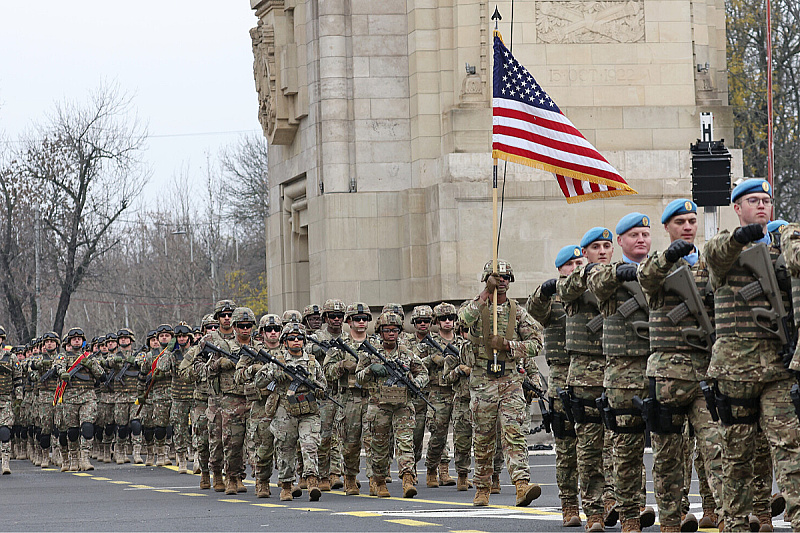
The United States currently has more than 80,000 troops in Europe and has played a key role in the continent's security architecture since World War II. More than 30,000 of these troops are stationed in Germany, with significant numbers also in Italy, the United Kingdom, and Spain.
The official did not specify which countries might be affected or how many troops could be withdrawn if Trump decides to move forward with this idea.
Trump's long-standing tense relationship with NATO has further intensified over the past three months. In early January, he sparked a transatlantic crisis by renewing threats to annex Greenland, an overseas territory of Denmark.
Since the outbreak of war with Iran on February 28, he has expressed deep dissatisfaction that NATO allies have not offered assistance in reopening the Strait of Hormuz, a key route for global energy supplies, which remains largely closed despite a fragile ceasefire announced this week.
NATO diplomats have previously noted that the U.S. has not clearly specified whether it expects any potential mission in the Strait of Hormuz to begin during or after the conflict, nor has it detailed the exact capabilities it expects from each individual member.