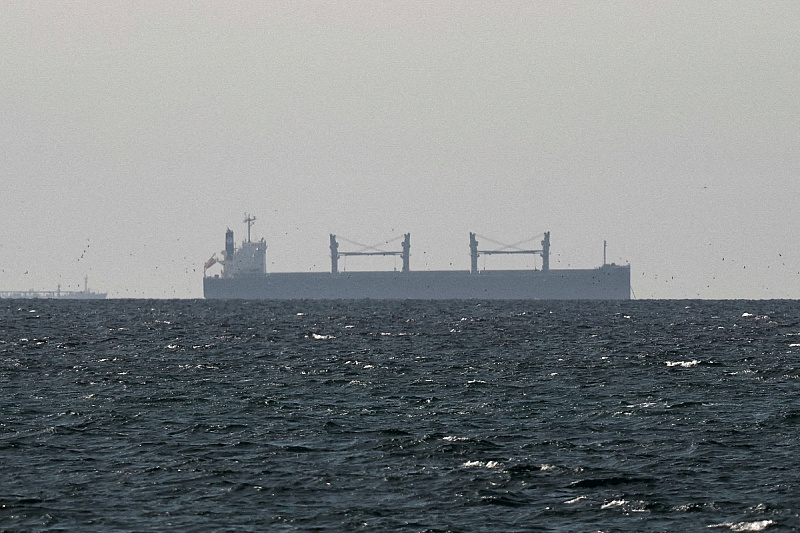
According to the data, at least eight ships, including three tankers linked to Iran, have passed through this strategic strait despite the blockade announced by Donald Trump. The U.S. president announced the blockade on Sunday after weekend negotiations between the U.S. and Iran in Islamabad failed to yield an agreement. This move has further increased uncertainty in the oil market, among shipping companies, and war risk insurers, while traffic through the strait remains significantly lower than before the escalation of tensions between the U.S. and Iran. According to Reuters, although U.S. forces claimed that no ship passed without being stopped, in reality, some tankers continued their voyage, including vessels not directly bound for Iranian ports. Simultaneously, China’s Ministry of Foreign Affairs described the U.S. blockade as "dangerous and irresponsible," warning of further destabilization in the region. It is worth noting that, according to CENTCOM, the blockade operation involves over 10,000 U.S. sailors, marines, and air force personnel, supported by more than ten warships and a large number of aircraft. They claim the goal is to halt vessels entering and exiting Iranian ports in the broader Persian Gulf and Gulf of Oman area. CENTCOM stated that during the first 24 hours, no ship managed to "break through the blockade," and six commercial vessels complied with U.S. force orders and turned back toward Iranian ports in the Gulf of Oman. They also emphasized that the measures apply to all ships without exception, asserting that the blockade is being enforced "impartially," while simultaneously stressing that freedom of navigation remains guaranteed for vessels not entering Iranian ports. U.S. forces warned that any attempts at unauthorized passage would be intercepted, redirected, or seized, with the exception of humanitarian shipments. Meanwhile, Iran and its military officials have announced the possibility of retaliation, further raising tensions in a region critical to global energy trade.
Society
Reports refute U.S. claims: The first day of the American blockade had minimal impact on traffic through Hormuz.
The first full day of the American blockade of ships docking at Iranian ports had minimal impact on traffic through the Strait of Hormuz, according to shipping movement data.
ingestion