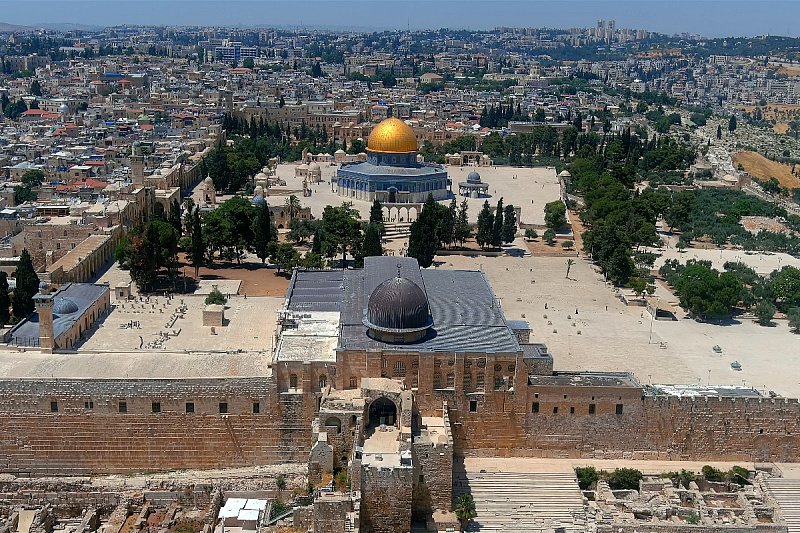
According to data from the Palestinian Authority's Jerusalem Governorate Office, at least seven attempts to smuggle animals were recorded on Sunday. Israeli authorities closed the complex for 40 days, including the period of Ramadan and Eid al-Fitr, justifying it as part of the war against Iran.
Various reports indicate that settlers were caught in the Old City, on the way to Al-Aqsa, with goats and sheep.
Despite Israeli authorities reopening the holy site for Muslims early Thursday morning, Israeli incursions continued.
Ismail Patel, chairman of the British organization Friends of al-Aqsa, told The New Arab that attempts to sacrifice animals are not only a religious provocation but also a political one.
"This signals that they are no longer seeking access but claiming ownership... The sacrifice not only follows their ambition to demolish Al-Aqsa and build the Third Temple, it enacts that ambition. This is worship as conquest, and that is why it must be called by its true name: terrorism," he said.
Attempts to smuggle and sacrifice animals at Al-Aqsa are based on the belief of Jewish extremists that Al-Aqsa must be demolished to be replaced by the "Third Temple."
According to some interpretations of Judaism, the "Third Temple" is meant to replace Al-Aqsa after the site is purified through a series of rituals.
These sacrifices violate the longstanding status quo that prohibits Jewish religious rituals at Al-Aqsa, the third holiest site in Islam.
Palestinians have long warned of coordinated efforts to "Judaize" Al-Aqsa, with far-right Israeli extremist figures frequently raiding the site, which was the first direction Muslims worldwide faced in prayer before the Kaaba in Mecca.