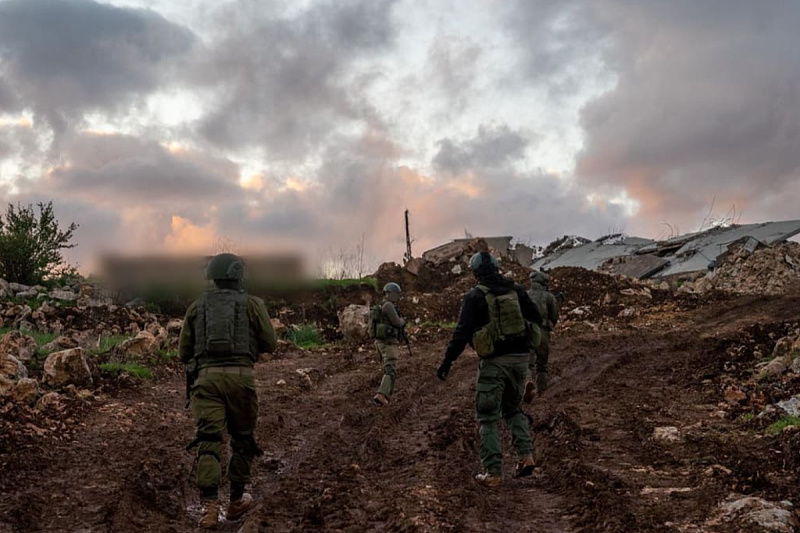
The military also stated that by the end of 2024, it had not fully disarmed the areas of southern Lebanon but is now making efforts to do so. The IDF's greatest challenge in disarming Hezbollah likely lies in the storage facilities for self-propelled rockets deployed north of the Litani River.
IDF divisions in Lebanon are expected to complete the occupation of territory eight to ten kilometers from the border with Israel next week, which would reduce Hezbollah's ability to fire anti-tank missiles toward Israel and extend the warning time for rocket attacks from Lebanon.
Five IDF divisions, previously reported to be operating in Lebanon, are expected to complete the occupation of territory near the Litani River. The IDF's 36th and 91st divisions are deep inside Lebanon, while two others are operating along the border with Lebanon. The 146th division is operating on the Lebanese coast. In mid-March, it was announced that the 98th division might join the invasion.
Earlier, the IDF used air forces to attack rocket launches in southern Lebanon, particularly in the Bekaa Valley. The presence of ground troops in the area up to the Litani River suggests the military is seeking to mitigate the threat.
Later on Friday, IDF Chief of Staff Lieutenant General Eyal Zamir clarified that the military "remains committed to the long-term goal of disarming Hezbollah. This goal encompasses a wide range of activities that will continue over time."
He added that the current campaign "is causing damage to Hezbollah and weakening it" and will lead to its disarmament in the long term.
Defense Minister Israel Katz emphasized that disarming Hezbollah is the main military priority.
"Israel's policy in Lebanon has been and remains clear: the main goal is to disarm Hezbollah through military and diplomatic means—regardless of the Iran issue. We promised security to the northern communities, and we will fulfill that," Katz said in a video statement.