Hamid Hosseini, spokesperson for the Union of Exporters of Oil, Gas, and Petrochemical Products of Iran, told the Financial Times that Iran intends to charge fees to every tanker passing through and inspect each vessel. "Iran must monitor what enters and exits the strait to ensure these two weeks are not used to transport weapons. Everything can pass, but the procedure will take time for each ship, and Iran is in no hurry," said Hosseini, whose association works closely with the state. Decisions on the conditions for passage through the strait are made by Iran's Supreme National Security Council. Hosseini's statements suggest that Iran will require all tankers to use the northern route along its coast, raising the question of whether vessels linked to Western or Gulf states will be willing to risk transit. Hosseini said each tanker must notify the authorities via email about its cargo, after which Iran will inform them of the fee amount, payable in digital currencies. He added that the fee is one dollar per barrel of oil, and empty tankers can pass without charge. "When the email arrives and Iran completes the assessment, ships are given a few seconds to pay in Bitcoin, ensuring they cannot be tracked or seized due to sanctions," said Hosseini. Tankers in the Gulf received a radio warning message on Wednesday that they would be targeted by military strikes if they did not obtain prior approval from Iranian authorities. "If any ship attempts to pass without permission, it will be destroyed," stated the message in English, according to a recording shared with the FT. The fate of transit through the strait is one of the most difficult issues facing negotiators as they try to turn a temporary truce into a lasting peace, with Iran's desire to maintain influence over this key waterway clashing with strong opposition from U.S. allies in the Gulf. U.S. President Donald Trump said on Tuesday evening that the truce is conditional on "the complete, immediate, and safe opening of the Strait of Hormuz by the Islamic Republic of Iran," according to a social media post. A statement from Iran's Supreme National Security Council outlines 10 points forming the basis of negotiations with the U.S., including a new "safe passage protocol" through the strait coordinated with Iranian armed forces. Western shipowners said on Wednesday they are taking a cautious approach while awaiting details on how and whether the strait will reopen, with no ships currently attempting passage except two linked to Iran. Maersk, the world's second-largest shipping company, stated it is "urgently working" to clarify the conditions. "The truce may create opportunities for transit, but it does not yet provide full security for maritime traffic," the company said, adding that it will continue with a "cautious approach" and is not changing specific services for now. Allowing Iran to continue controlling this key waterway is likely unacceptable to Gulf states, including Saudi Arabia, Qatar, and the UAE. It also raises questions for OPEC+, with analysts warning that granting Iran control over Hormuz could fundamentally shift the balance of power within the organization, giving Tehran a potential veto over the exports of rival members. Ali Shihabi, a commentator close to the Saudi royal court, said the kingdom will demand "unhindered" access to global markets. "Allowing Iran any form of control over the strait would be a red line. The priority must be unimpeded passage through the strait," said Shihabi. On Wednesday, a key Saudi East-West oil pipeline, which the kingdom uses to redirect exports to the Red Sea, was hit by a drone, according to sources familiar with the situation, despite the truce. According to the latest data, around 175 million barrels of crude and refined oil are currently loaded on 187 tankers in the Gulf, which could now begin moving, depending on the situation in the strait. Industry executives estimate that between 300 and 400 ships are waiting to leave the Gulf as soon as passage is safe, with one describing the situation as a "parking lot." Several traders believe the situation in the coming days will resemble the system developed over the past two weeks, in which a smaller number of ships approved by Iran are allowed passage along a specific route. During the conflict, this mainly applied to ships that had previously done business with Iran and were not linked to the U.S., Israel, or Gulf states providing logistical support for attacks. Martin Kelly, director of advisory at maritime intelligence group EOS Risk, said there is "no chance" the backlog of waiting ships will be cleared within two weeks. According to him, about 10 to 15 ships could pass through the strait daily, as the process is "quite lengthy," a significant drop from the 135 ships per day before the war.
Society
Iran will charge one dollar per barrel of oil passing through the Strait of Hormuz, but in cryptocurrency.
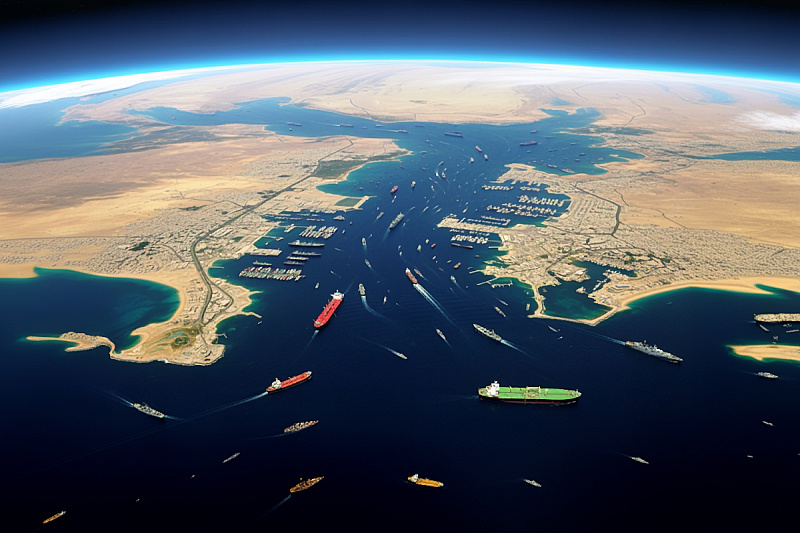
Iran will require shipping companies to pay fees in cryptocurrencies for oil tankers passing through the Strait of Hormuz, as it seeks to maintain control over passage through this key waterway during the two-week truce.
ingestion