Last month, market leader Bisleri raised prices by 11 percent, making a pack of 12 one-liter water bottles more expensive by 24 rupees (0.44 KM). Other brands selling bottled water have also increased prices, reports the Reuters news agency. According to a study conducted by Data for India, about 15 percent of urban households and six percent of rural households depend on bottled water. Reliance on bottled water is costly, especially for people in rural areas. However, access to clean water remains a challenge in many parts of India, particularly in summer, due to reasons including water scarcity, groundwater contamination, and infrastructure deficiencies. Vijaysinh Dubbal, president of the Maharashtra Bottled Water Manufacturers Association, explains that the main reason bottled water has become expensive is the sharp rise in crude oil prices. The price of a barrel of Brent crude briefly reached $119 earlier this week, nearing its highest level since the start of the war between the U.S. and Israel with Iran. Crude oil is used to produce granules that are heated and passed through molds to create PET preforms. These preforms, which look like plastic test tubes, are sold to brands and bottle manufacturers to be shaped into plastic bottles of the desired form and size. "The price of preforms has increased from 115 rupees (2.10 KM) per kilogram to about 180 rupees (3.28 KM) per kilogram. There is also a shortage of preforms," says Dubbal, adding that about 20 percent of bottle manufacturing plants in the state of Maharashtra have temporarily halted operations. He adds that the supply pressure could not have come at a worse time, given that there is an increase in demand for bottled water and soft drinks during April and May. Besides bottled water and beverages, PET packaging is also widely used in industries such as beauty, pharmaceuticals, and even in restaurants and food delivery, as customers seek convenience and affordable prices. Glass bottle manufacturers are also bearing the brunt of the war. Glass manufacturers use natural gas to power their furnaces, which melt sand, soda, limestone, and recycled glass into molten glass beads that are then shaped into bottles.
Society
India is feeling the effects of the war in the Middle East, and bottled water is becoming more expensive.
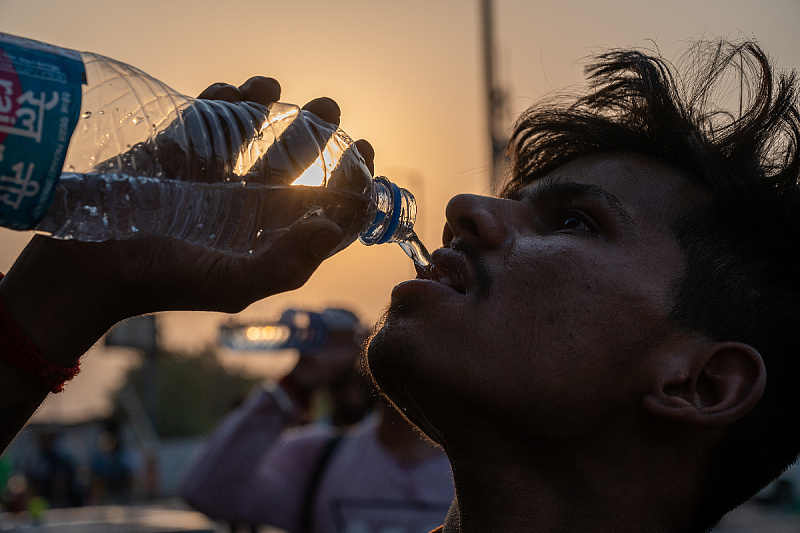
Indians are preparing for summer, with temperatures expected to exceed 45 degrees Celsius in some parts of the country. However, the war with Iran is straining India's six-billion-dollar bottled water industry, as manufacturers struggle with access to key raw materials.
ingestion