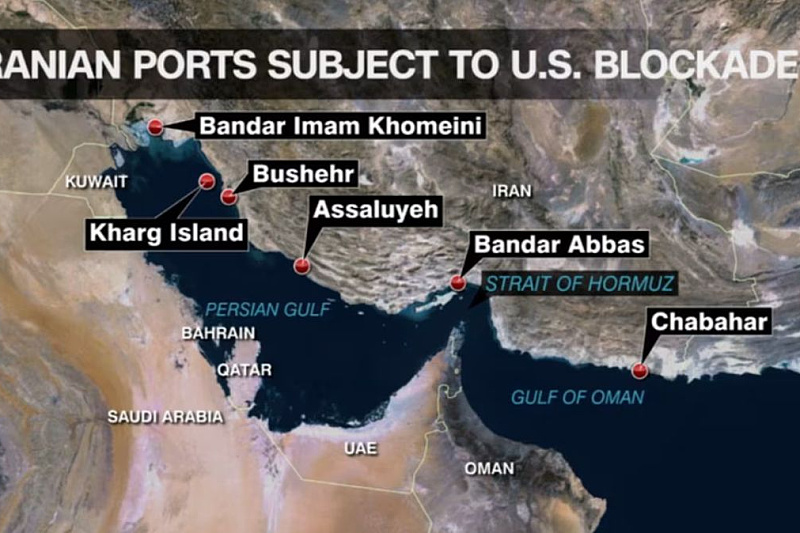
Last year, Tehran exported up to 1.68 million barrels of oil per day by sea, according to data from the analytics firm Kpler, earning foreign currency to boost its economy. Although surrounded by fuel-hungry neighbors, replicating these volumes overland will be a challenging task, analysts say. Tehran could attempt to increase gas exports via pipelines to Iraq, Turkey, and Armenia, or export oil through its Neka oil terminal in the Caspian Sea, Hasan Alhasan, a senior fellow for Middle East policy at the International Institute for Strategic Studies in Bahrain, previously told CNN. "Iran could also increase fuel smuggling across its long land border with Pakistan or evade the blockade by blending its oil with Iraqi oil, as it has done in the past," Alhasan said. But Alhasan noted that the overall impact of these alternative routes is uncertain. In February, the International Energy Agency reported that 'available capacity on alternative export routes is limited.' Iran is struggling to maintain its outdated infrastructure due to years of sanctions. Gas exports to Turkey have fallen below contracted volumes in recent years, and its volumes to Armenia as part of a gas-for-electricity swap "remain marginal in Iran's overall gas balance," according to a January blog post published by the Center on Global Energy Policy. Without its oil flowing to the market through the Strait of Hormuz, Tehran's economic outlook is bleak. "The Iranian economy is much more vulnerable to collapse if this blockade continues and the Strait of Hormuz remains closed," Miad Maleki, a former senior official at the U.S. Treasury and a senior advisor at the Foundation for Defense of Democracies, told CNN.
Society
Does Iran have other options for oil and gas trade if the Americans block its ports?
As the U.S. military blockade of Iranian seaports intensifies, the question arises whether this country has any land options through which it could maintain the flow of its gas and oil.
ingestion