Approximately one-fifth of the world's total oil and liquefied natural gas passes through it. When it functions, no one talks about it. When it closes, the entire world feels it.
And that is precisely what has happened. The escalation of conflict between the U.S., Israel, and Iran has led to an almost complete halt of maritime traffic through the strait, which the International Energy Agency has declared the largest disruption of energy supply ever recorded. The price of crude oil is heading toward $120 per barrel, and the effects have been felt faster than anyone could have predicted—and in the most unexpected place: car dealerships.
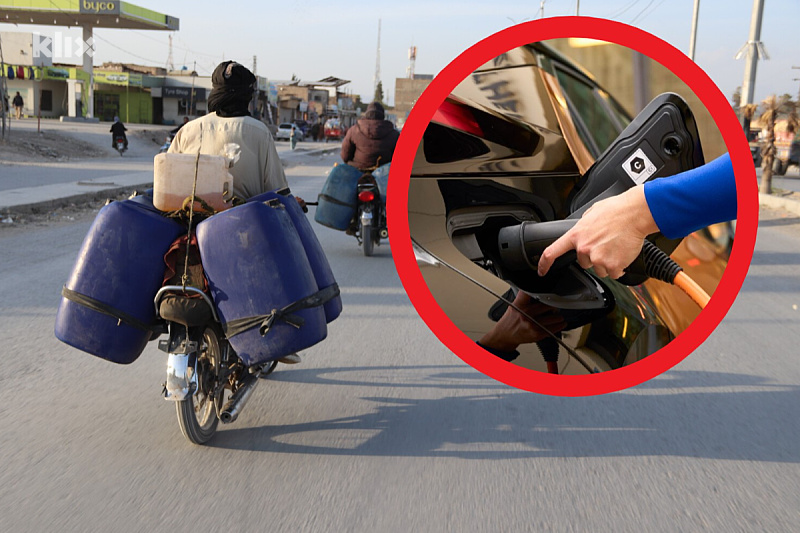
Asia Pays the Highest Price More than 80 percent of the oil passing through the Strait of Hormuz has Asia as its destination, making this region by far the biggest victim of the blockade. The consequences are immediately visible. The governments of the Philippines, Sri Lanka, Pakistan, and Bangladesh have implemented energy rationing measures that the Western world has forgotten: a four-day workweek, school closures, and bans on air conditioning use in public spaces. Fuel rationing has become a daily reality, and prices at the pump have reached levels that force ordinary people to reconsider every trip.
The situation in Japan is particularly indicative. For decades, the country has built its own path through hybrid technology, avoiding a sudden leap toward fully electric vehicles. The Japanese government continues to subsidize fuel prices to cushion the impact on consumers, but such policies have an expiration date. When oil trades near $120 per barrel, subsidies become increasingly expensive, and arguments for delaying electrification grow thinner. Analysts who until recently spoke of a slow, gradual transition now openly talk about a tipping point.
In such a situation, the electric car suddenly takes on an entirely new dimension. It is no longer about an environmentally conscious purchase or a technological status symbol. The electric car becomes a practical response to economic necessity. Not needing oil, when oil becomes scarce and inaccessible, ceases to be an abstract advantage and becomes a tangible daily saving.
Numbers Speak for Themselves Other markets have also reacted quickly and clearly. In Australia, loan applications for purchasing electric vehicles doubled in March compared to the previous month, according to data from the National Australia Bank. South Korea recorded twice as many registrations of electric and hybrid vehicles compared to the same period last year. New Zealand went a step further. In just one week at the end of March, over 1,000 electric vehicles were registered—almost double the number from the week before.
The industry has not remained on the sidelines either. BYD, the world's largest electric vehicle manufacturer, has seen a dramatic shift in its sales structure: the share of sales in foreign markets jumped from 22.7 percent of total sales last year to over 50 percent in the first two months of 2026. While the domestic Chinese market stagnates due to saturation, external demand has exploded, particularly in regions hardest hit by the crisis.
Europe: Distant from the Crisis, but Not Immune Europe does not feel the crisis with the same intensity as Asia, and there are concrete reasons for this. A significant portion of the gas consumed by the continent comes via pipelines from Norway, Algeria, or Russia, completely bypassing the Strait of Hormuz. However, this geographic and infrastructural protection has clear limits—oil does not have a regional price. When it spikes in Asia, it spikes everywhere, including at gas stations in Berlin, Paris, or Sarajevo, regardless of the route the barrel took to reach the refinery.
The broader picture is even more concerning: Europe still depends on fossil fuels for over 70 percent of its total energy consumption. Renewable sources are seeing impressive growth in the electricity segment, but transportation, which consumes enormous amounts of energy daily, remains almost entirely dependent on oil.
The question is not whether the crisis in the Strait of Hormuz will change global purchasing habits. It already is. The only questions are how permanent this change will be and whether the rest of the world will wait for its own crisis to make the decision Asia is already making—turning its back on oil en masse and switching to electric vehicles.