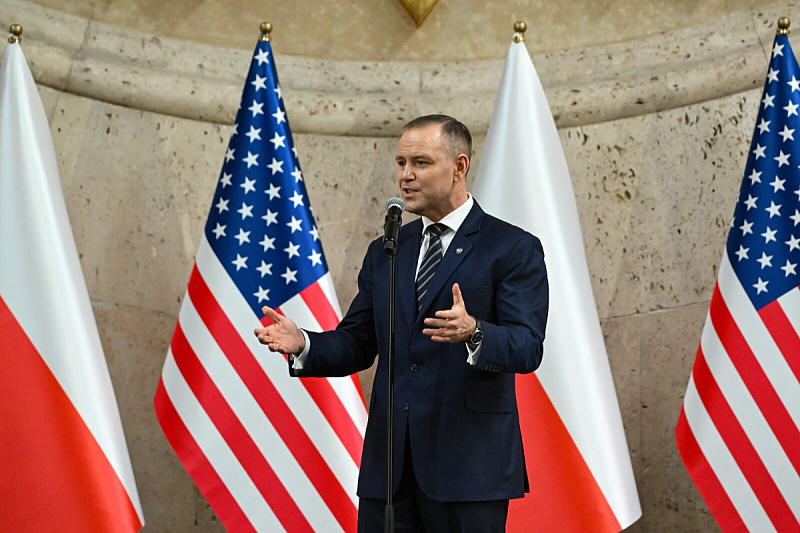
President Karol Nawrocki and representatives of the PiS party, which represents the radical right, supported Orbán, with some going so far as to predict a "collapse of Europe" if he were defeated before the election. Polish Prime Minister Donald Tusk, who leads a liberal government without PiS, said in his congratulatory message to Magyar on his victory that he was "happier than him." The reason for this is that Orbán's fall has seriously shaken his populist governing principle, which right-wingers in Poland also want to implement. Although Nawrocki and his colleagues even supported Orbán through visits, there is now a kind of reversal, even a distancing from Poland's soon-to-be former leader. "Orbán was an ally of Poland only in the conflict with cosmopolitans and centralizers in the EU and on migration issues. That was important, but not enough," wrote Sławomir Cenckiewicz, head of Nawrocki's National Security Bureau, on social media. Tobiasz Bocheński, a PiS representative in the European Parliament, said that "Orbán's policy toward the East was completely different" from his party's, referring to relations with Russia. Key figures in PiS are either silent or issuing non-controversial congratulations to Magyar, while trying to change the subject in Warsaw by shifting to domestic issues. Party posts on X on Monday focused on attacks against Tusk over healthcare, with no mention of the Hungarian result. Another problem for the Polish right is its association with the administration of U.S. President Donald Trump. The visit of JD Vance, Trump's vice president, was seen as a "minus" in Fidesz's pre-election campaign, and the Polish right, with particular emphasis on Nawrocki, is inseparable from American conservatives, especially Trump's MAGA movement. For Poland, whose citizens are considered extremely pro-American, the issue of support for Trump and his closest ideological allies will be crucial for PiS ahead of elections scheduled for next fall.
Society
Will the "Hungarian wave" flood Poland as well: Right-wingers already distancing themselves from Viktor Orban
The victory of Peter Magyar and the Tisza party in the Hungarian elections has resonated across Europe and the world, primarily because there is a prevailing sense that the principle of "illiberal democracy" has been defeated. Precisely for this reason, fears of declining popularity are growing among right-wingers in Poland.
ingestion