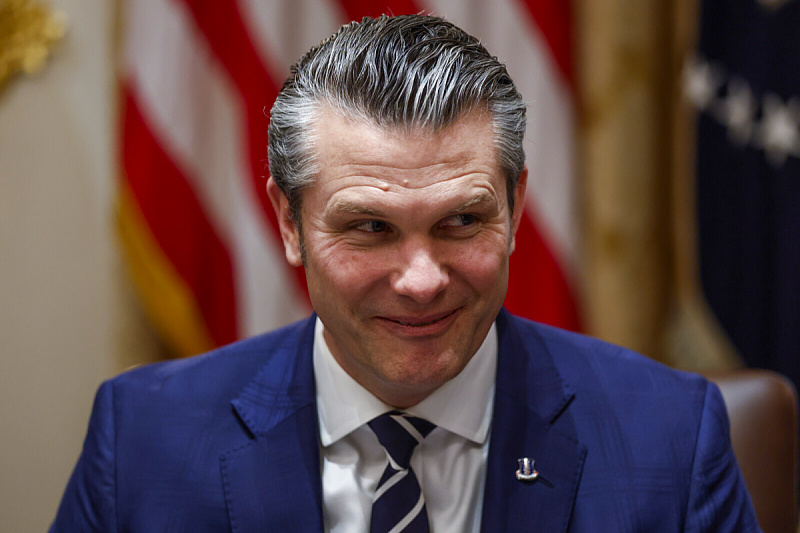
On Thursday, Hegseth called for the resignation of Army Chief of Staff General Randy George, Driscoll's top aide, amid the war with Iran, for reasons that were not publicly explained.
"All of this is driven by the insecurity and paranoia Pete developed after 'Signalgate.' Unfortunately, it's further fueled by some of his closest aides, who should be calming the situation," said one official, referring to Hegseth's March 2025 group chat with national security officials that mistakenly included a journalist.
Two other generals, David Hodne from the Army's Transformation and Training Command and Major General William Green, were dismissed in the purge, with the department only stating that "it was time for a change in leadership."
"[Hegseth has a major conflict with Driscoll. And he was told by the White House that he can't fire him, at least for now. Hegseth is very worried he could be removed and knows Driscoll is a top candidate, the natural successor. So Pete is going after everyone he considers close to Driscoll. This is the latest and most dramatic example of that," said a source close to the Donald Trump administration.
Driscoll is a close friend of Vice President JD Vance, with whom he attended Yale Law School after both served in the Iraq War. His name was already mentioned last summer as a possible solution for Hegseth's successor, and suspicions grew further when Driscoll participated as a negotiator in the Ukraine war last fall.
"This isn't just another story about Pete focusing on DEI. It's not about that. He is specifically targeting the military. Essentially, Hegseth has isolated him and is trying to sideline him behind the scenes. Hegseth wants to fire him, but Vance is protecting him," said another source.
The paranoia is not entirely unfounded; President Donald Trump publicly praised Driscoll's work last year. The position of Army Secretary has previously served as a springboard, as Mark Esper moved to the position of Defense Secretary during Trump's first term after replacing James Mattis.
John Ullyot, a Marine veteran who worked in both Trump administrations, told The Post that Driscoll is the real deal and that Hegseth can't stand it when Army generals show the respect Driscoll has earned through service.
Hegseth's Spokesman as a Possible Replacement for Driscoll
One administration official said Hegseth's chief spokesman, Sean Parnell, is "pushing himself" as a candidate for Army Secretary if Driscoll is removed.
Parnell is a Bronze Star and Purple Heart recipient for service in Afghanistan, and two Pentagon colleagues believe he would be a logical choice if the position becomes vacant.
"It wouldn't be surprising to speculate that Sean could be considered as a successor, as he is one of the most prominent Army veterans currently working at the top of the department," said one Pentagon official.
There are no indications that Donald Trump is ready to immediately remove Hegseth or Driscoll, but the conflict increases pressure on both.
Recent changes in Trump's cabinet, including the removal of Homeland Security Secretary Kristi Noem last month and State Attorney General Pam Bondi on Thursday, have further intensified internal struggles, with insiders claiming it's all happening at the worst possible time as Trump tries to show strength to end the war with Iran.
The Iranian government mocked the U.S. on social media on Friday, writing: "Regime change successfully executed," alongside images of the dismissed military leaders.
Another source noted that Driscoll's brief role in Ukraine negotiations in November was a key turning point.
"Pete became very paranoid that Driscoll was talking to others in the military behind his back. The final straw was when Vance sent Driscoll to Ukraine as the lead negotiator for that meeting. That really got under his skin. He's trying to make everyone around Driscoll suffer for no reason," said the source.
This source also pointed to the "bad public optics of removing the Army's top general the day after the president addressed a skeptical public" about the war with Iran.
"It completely undermines the tone and message the president wants to send that the war is going well," he concluded, writes the New York Post.