In a video posted on platform X, Hegseth stated that he is signing a letter that will instruct base commanders to approve soldiers' requests to carry privately owned firearms "assuming it is necessary for personal protection." He noted that any denial of a service member's request must be thoroughly justified in writing. "Practically, our bases across the country were gun-free zones," Hegseth said. "Unless you were in training or you were military police, you could not carry, you could not bring your own personal firearm for personal protection onto the base." Questions about why members of the armed forces do not have access to weapons have often arisen after shootings at military bases across the U.S. Such attacks have ranged from isolated incidents between soldiers to mass assaults, like the 2009 shooting at Fort Hood in Texas committed by an army psychiatrist, which killed 13 people. In the video, Hegseth mentioned some of these events, including a shooting last year in which five soldiers were wounded at Fort Stewart in Georgia. Officials reported that the attacker, a U.S. Army sergeant employed at the base, used his personal pistol before being subdued and arrested by fellow soldiers. "In such situations, minutes are an eternity," Hegseth said. "And our armed forces members have the courage and training to make use of those precious, short minutes." The Department of Defense policy has so far prohibited soldiers from carrying personal weapons on base without approval from a senior commander, with strict protocols on how firearms must be stored. Typically, soldiers must officially check out their weapons from a secure storage facility to go to hunting grounds within the base or to shooting ranges, and then return them immediately after the authorized activity. Military police are often the only ones permanently armed on base, except at shooting ranges, hunting grounds, or during training, where soldiers may use official weapons. Tanya Schardt, senior counsel at the Brady organization for preventing gun violence, stated that top Department of Defense officials and military leadership have been against relaxing the existing policy, which was originally introduced during President George H. W. Bush's administration. Schardt emphasized that most active-duty service members who commit suicide do so with personal, not official, firearms, and warned that "there will undoubtedly be an increase in firearm suicides and other gun violence." Although fewer U.S. soldiers lost their lives to suicide in 2024, overall suicide rates among active-duty members have gradually increased between 2011 and 2024, according to a Pentagon report released on Tuesday. "Our military installations are among the most guarded, most protected facilities in the world and have never been 'gun-free zones,'" Schardt said. "If there is a problem with violent crime in these bases, then the Secretary of Defense has an obligation to alert the American people and explain how they are working to prevent that crime."
Society
Hegseth signed a letter and sent it to all U.S. base commanders: Changing the rule introduced by Bush
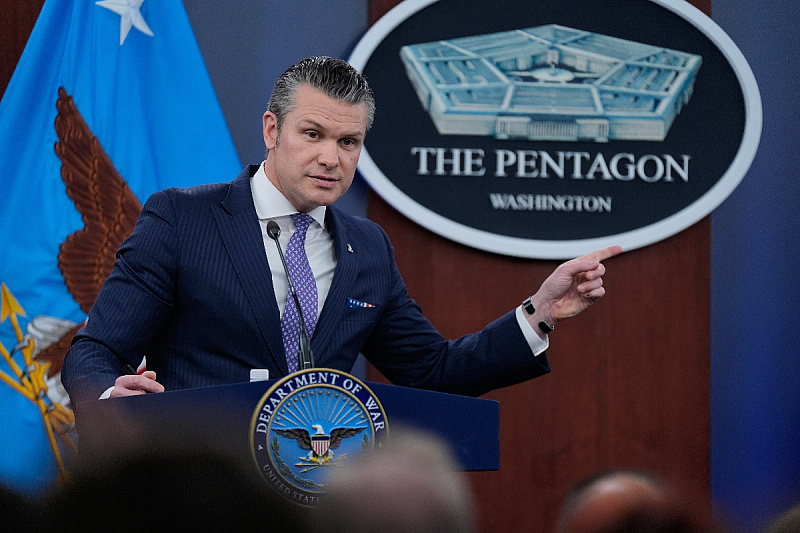
Defense Minister Pete Hegseth stated on Thursday that he will allow service members to carry personal weapons on military installations, citing the Second Amendment and recent shootings at bases across the country.
ingestion