In addition to the aforementioned cameras, the company also introduced a new wireless microphone system similar to DJI's Mic Mini, along with a directional microphone and other accessories.
"The combination of our new 50MP one-inch sensor and the ultra-efficient GP3 processor sets a new performance benchmark for compact cinema cameras, enabling resolutions, frame rates, low-light performance, battery life, and thermal capabilities never before seen in cameras this small," said GoPro Senior Vice President Pablo Lema.
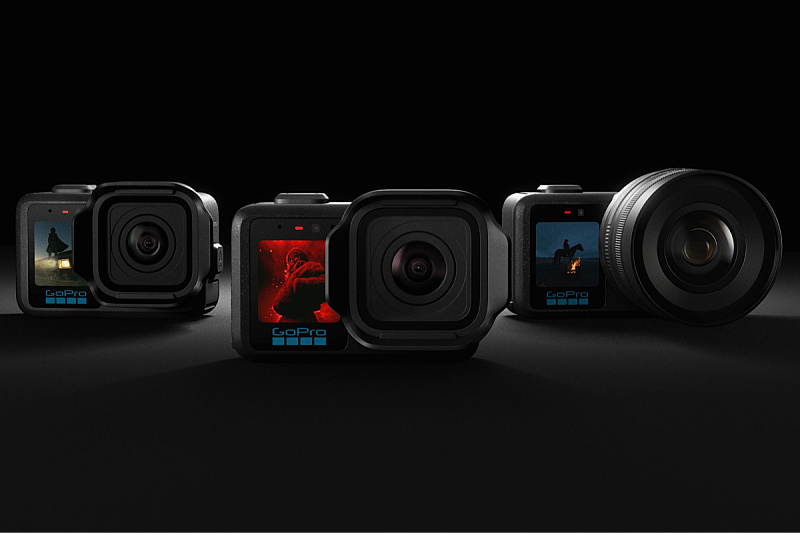
The new lineup includes three models: the Mission 1, Mission 1 Pro, and Mission 1 Pro ILS. All feature a 50MP one-inch sensor, the new GP3 processor, and can record video up to 8K resolution, but the Mission 1 Pro supports higher frame rates. The Mission 1 Pro ILS (Interchangeable Lens System) comes with a lens mount, allowing you to use high-quality Micro Four Thirds lenses from manufacturers like Panasonic and OM System.
The Mission 1 features an updated lens design with a natural 159-degree field of view, the widest in its class. It also has a new OLED rear screen that is 14 percent larger than previous flagship GoPro cameras, along with larger raised buttons for easier use with gloves and a removable lens hood to reduce glare and lens flare.
The 50MP one-inch sensor features large 1.6μm pixels at full resolution or 3.2μm binned pixels when operating in 4K resolution in quad-bayer mode. This enables a greater dynamic range of up to 14 stops and improved low-light performance with "exceptional detail in the darkest shadows while protecting details in highlights," claims GoPro. However, low-light performance is likely better in quad-bayer 4K mode than in full 8K resolution.
Meanwhile, the new GP3 processor offers an energy-efficient 5nm design that enables "the best resolutions, frame rates, and image quality in the class," states the company. Those resolutions include 8K at up to 60 fps for the Mission 1 Pro/Pro ILS models, 4K at up to 240 fps, and 1080p at up to 960 fps. GoPro also offers 10-bit HLG/HDR and 10-bit GP-Log2 modes to maximize dynamic range.
The Pro models support open gate recording in a 4:3 format, allowing you to easily reframe footage or export video for different platforms. The Mission records video up to 8K at 30 fps, 4K at 120 fps, and 1080p at 480 fps, along with open gate video in 4K at 120 fps. You can capture 50MP RAW photos at burst speeds up to 60 fps on all Mission 1 models.
The lineup promises excellent battery life thanks to the new Enduro 2 battery, with over three hours of recording in 4K 30p resolution on a single charge. You can also use Hero 13 batteries, though with shorter recording times. The company also promises faster charging speeds. Thermal performance is solid despite the small size, allowing for possible 8K 60p recording for 37 minutes continuously without airflow or 74 minutes with airflow (for example, while cycling). However, unlike recent competitors, the Mission 1 supports a microSD card but has no internal storage.
Like its competitors from DJI and Insta360, Mission 1 cameras offer multiple intelligent shooting modes, including Subject Tracking, Dive (underwater stabilization), and Low-Light, along with Slow-Mo, Lapse, Sport POV, Vlog, and Open Gate modes. GoPro action cameras generally have excellent stabilization, so it will be interesting to see if the Mission 1 series continues that trend, especially in low-light conditions.
GoPro doesn't skimp on audio either, as Mission 1 models offer a four-microphone system with 32-bit float, along with stereo recording and wind noise reduction. You can wirelessly connect to compatible devices via Bluetooth 5.3 or wired microphones via a USB-C audio connection.
The Mission 1 Pro ILS could be the first action camera with an interchangeable lens mount, compatible with all Micro Four Thirds lenses and adapters. GoPro HyperSmooth electronic video stabilization will work with any fixed (non-fisheye) lens. It is "the smallest, most robust, and most versatile high-speed cinema camera in the world at a price and size significantly lower than comparable cameras," announced GoPro. Most lenses will likely make the camera too heavy and cumbersome to attach to a helmet or body, but you could certainly mount it on a motorcycle, car, or other vehicle.
Alongside the Mission 1 cameras, GoPro also introduced some new accessories. Key among them is a new wireless microphone system designed for easy pairing with Mission 1 cameras, as well as DSLR cameras and smartphones. With a charging case and magnetic clips, it closely resembles DJI's Mic Mini system and offers 24-bit/48kHz audio with dynamic noise reduction, 150 meters of wireless range, 6.5 hours of operation, adjustable gain, and a safety track mode.
Other additional equipment includes a Media Mod kit with a built-in multi-directional microphone and expanded I/O capabilities, including 3.5mm microphone and headphone jacks, a micro HDMI port, and a line input for timecode synchronization. GoPro also offers a new "Point-and-Shoot" grip, M-Series ND filters, a protective housing, a dual Enduro 2 battery charger, a Volta battery grip, and a Light Mod 2 LED light. Compatibility with GoPro subscription and the Quick app is enabled, along with GoPro Labs, which unlock higher data transfer speeds (up to 300 Mbps) and over 1,000 advanced settings.
The new models will be available individually or in kits, including the Mission 1 Pro Creator Edition bundled with the Media Mod, wireless microphone system, and Volta battery grip. The Mission 1 Pro Ultimate Creator Edition includes these options and adds the GoPro Fluid Pro AI gimbal and Light Mod 2. Pricing and availability will be announced later.