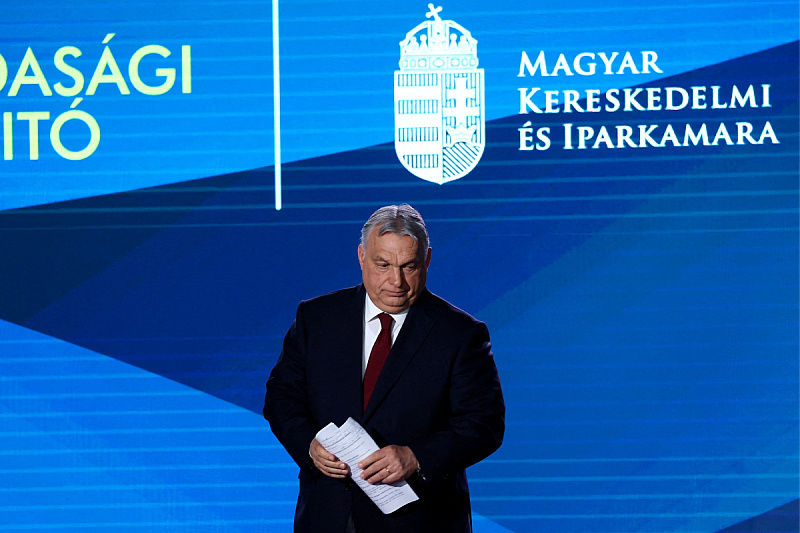
Prime Minister Viktor Orbán has ensured this by tilting the electoral field heavily in his favor through a gradual state capture built over years in power. His tactics are not as overt as the managed elections of Russian President Vladimir Putin; Orbán does not ban serious opponents from running. But his rivals argue he has nonetheless created a massive unfair advantage for his Fidesz party through gerrymandering, a controlled media landscape, and vote-buying.
Although independent pollsters have reported for months that opposition leader Péter Magyar and his center-right Tisza party are ahead of Fidesz, actually defeating Orbán on election day will be very difficult. The on-the-ground reality of elections in Hungary differs significantly from the trends shown by polls.
During his 16 years in power, Orbán has maintained complete control over the rules governing elections, adjusting them to political circumstances and changes in the opposition, all to secure a systemic advantage for his party.
Ahead of the 2022 elections, opposition parties also had high hopes after forming a united front against Orbán, but Fidesz's entrenched advantage ultimately allowed the party to win a crucial two-thirds majority in parliament.
The opposition fears a repeat of 2014 and 2018, when Orbán secured parliamentary supermajorities with less than half of the total votes, thanks to an electoral system favoring Fidesz, organized "voter tourism," gerrymandering, support from ethnic Hungarians in neighboring countries, and compliant media largely controlled by his business allies.
After Orbán won the last free and fair elections in 2010, he quickly began laying the groundwork for his later victories. He reduced the number of MPs and divided the country into 106 single-member constituencies that vary significantly in size. Larger constituencies are in opposition strongholds, while smaller ones are in areas loyal to Fidesz. An additional 93 seats are elected proportionally through party lists.
For many voters, especially in rural areas, the only electoral messages they hear come from the government, while the opposition has almost no media access. Orbán has near-total control over the media.
Since 2010, the state has stopped advertising in critical media, and private advertisers have been warned to cease cooperation with media outlets not favorable to Fidesz or risk losing state contracts. Independent media began to collapse, already weakened by the rise of the internet, and were subsequently bought by Orbán's business allies at low prices.
As the 2022 elections approached, it became clear that Orbán would face a united opposition. In November 2021, he legalized so-called "voter tourism," allowing Hungarians to register to vote anywhere in the country, even if they do not live there.
The Hungarian Helsinki Committee, a human rights NGO, warned that this law creates a risk of voters mass-reregistering in constituencies where a tight race is expected to influence the outcome.
In search of additional votes and mandates ahead of the 2014 elections, Orbán offered citizenship and voting rights to nearly two million ethnic Hungarians in neighboring countries. Over the years, hundreds of thousands of people from territories that were once part of Hungary before World War I have accepted this offer.
These voters are mostly older and often harbor resentment over territorial losses after the war. About 90 percent of them vote for Fidesz, which has invested hundreds of millions of euros in their communities. With nearly 500,000 registered voters out of a total of about 8 million, they can significantly influence the outcome.
When all that is not enough, there are also allegations of direct vote-buying. This practice is called "Krumpliosztás," or "potato distribution," because critics claim that in poorer areas, such as Roma communities, food is literally handed out.
In 2020, a far-right MP was fined after throwing a bag of potatoes at Orbán's desk, accusing him of buying votes.
During the last elections, the Coalition for Clean Elections, an alliance of four Hungarian NGOs, reported receiving numerous complaints of irregularities, including offers of 10,000 forints (about 26 euros) for a vote. Meat and other groceries were also offered as incentives, the coalition stated.
These allegations have also emerged during these elections. A documentary by independent journalists titled "The Price of a Vote," aired on March 26, claims there is widespread vote-buying and voter pressure in rural areas. Witnesses allege that Fidesz offered money in exchange for votes.