First and foremost, there is the ID. Polo, intended to overshadow interest in the petrol version of the same name, and the ID. Cross, which will more heavily attract buyers of the current smallest crossover on offer, but that's not all.
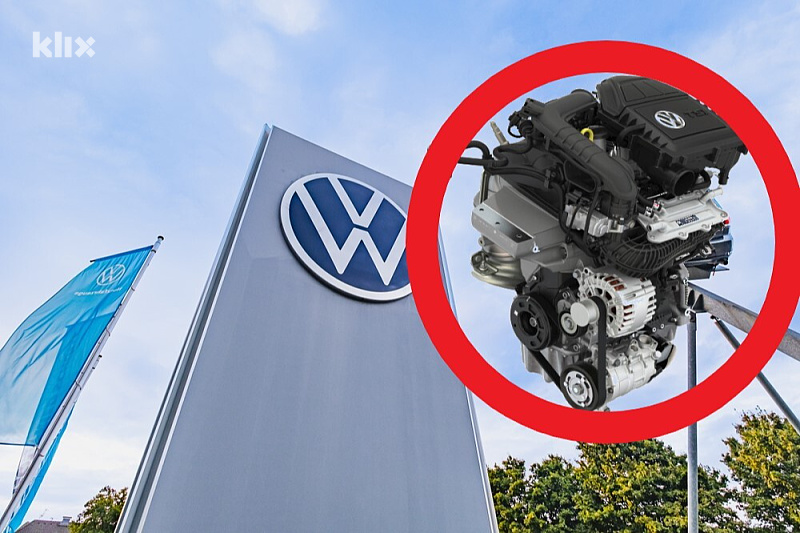
However, these zero-emission alternatives are not available in Seat or Škoda, and representatives of these brands still have to cope with adapting to the demanding Euro 7 standard, whose real problem, as it turns out, is not even emissions. This is one of the key reasons behind the decision that Volkswagen has been implementing for years: gradually phasing out the 1.0 TSI from compact models, whose end has now definitively arrived, writes Spanish motor.es.
The gradual withdrawal of this engine began as early as the start of 2024. It was an economical but overly "stressed" three-cylinder turbocharged unit that became inadequate, especially in compact models like the Golf, Octavia, Leon, Karoq, and A3.
No matter how much the turbo had to compensate for the lack of one cylinder, it ultimately proved to be too much to handle. The era of Volkswagen's downsizing philosophy has ended.
Volkswagen, in parallel with this small engine, offers the four-cylinder 1.5 TSI, even in small models like the Arona, Ibiza, Fabia, Kamiq, and Scala, but as a premium option. Now, this engine will also be available at lower power levels of 115 PS, with 48-volt MHEV technology.
The Škoda Fabia has already been caught testing with the new engine, meaning the Spanish, Czech, and parent German brand have until the end of the year to sell off stocks of vehicles with the 1.0 TSI engine. From 2027, all mentioned models will be sold exclusively with the 1.5-liter engine.
Volkswagen's goal is for the only transversely mounted petrol engines to be four-cylinder units of 1.5 or 2.0 liters, equipped with mild hybrid technology or as part of full hybrid systems.
The 1.5 TSI engine will cover a power range from 100 to 150 PS and will be key for hybrid variants (MHEV, HEV, and PHEV), while for higher power outputs, the powerful 2.0 TSI will be responsible. That engine is also facing changes, as Volkswagen has confirmed it will be adapted to the demanding Euro 7 standard with the help of MHEV technology, which could push its power beyond the current 333 PS. The premiere is expected in the new generation Volkswagen T-Roc R.