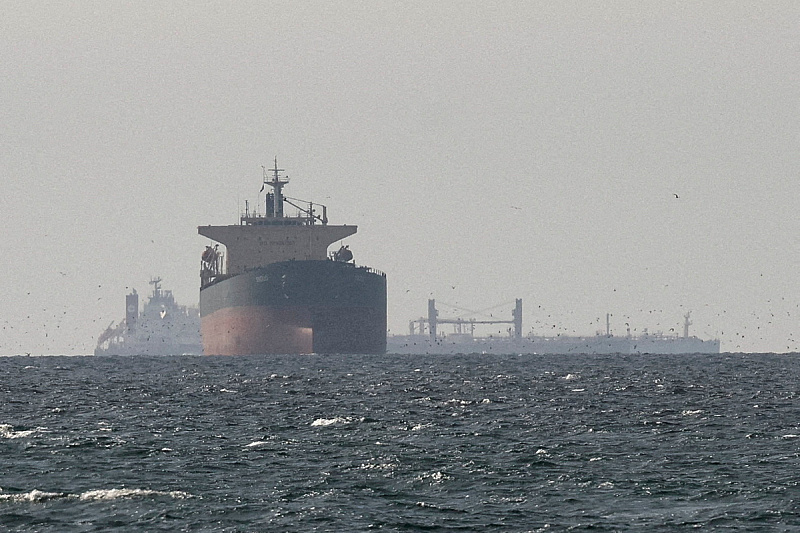
MarineTraffic data shows that several ships, mostly Chinese, are moving through or towards the entrance of the Persian Gulf. Among them is a Chinese cargo ship that, after nearly a month of sailing from the Iraqi port of Umm Qasr, passed through the area near the strait overnight. Additionally, two Chinese crude oil tankers, each with a capacity of about 300,000 tons and shown as loaded, were moving towards the strait on Saturday, with both vessels near the Iranian coast. At the same time, a liquefied natural gas tanker under the flag of Botswana, named Nidi, according to ship tracking data, attempted to leave the Gulf for the second time after previously returning on Friday. Although activity has increased, data shows that overall traffic remains significantly below the usual level of around 100 ships per day. U.S. President Donald Trump criticized Iran on Thursday for what he called poor management of oil passage through the Strait of Hormuz, stating that "it is not in accordance with the agreement." Iran's semi-official Tasnim agency reported that Tehran maintains control over transit conditions through the Strait of Hormuz, in response to what it claims are U.S. violations of the ceasefire agreement and continued Israeli attacks on Hezbollah in Lebanon. It is recalled that U.S. and Iranian delegations have arrived in Islamabad to participate in peace negotiations.
Society
Chinese ships dominate: Traffic through the Strait of Hormuz sees slight increase, but remains far below average.
According to ship tracking data, several ships are heading towards the Strait of Hormuz as peace negotiations between Iran and the United States continue in Islamabad.
ingestion