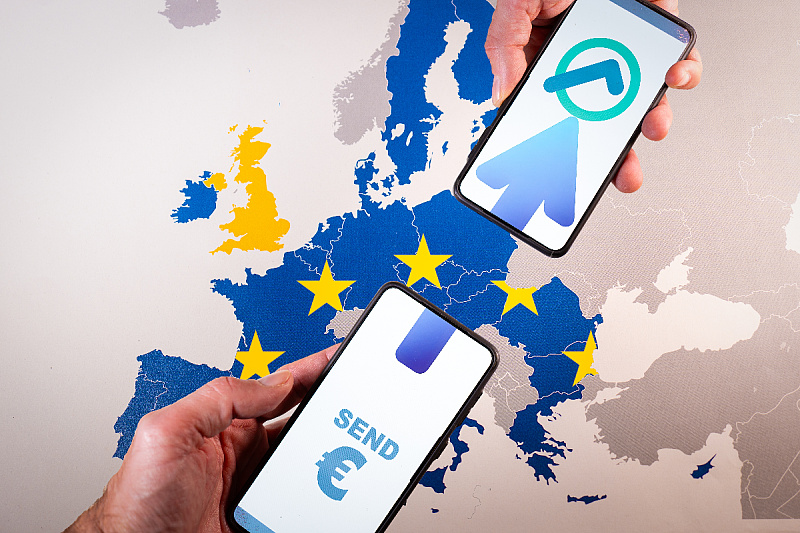
Over the past year, Bosnia and Herzegovina has made significant progress, with the Central Bank preparing a pre-application, but not all conditions for applying and membership have been met yet. Until BiH becomes a member of SEPA, significant money is lost on various fees for every transaction coming from abroad to our country, both for companies and for citizens individually.
For example, if a company or you individually receive a payment of 1,000 euros from abroad, by the time the money reaches you, you will not receive 1,000 euros, but approximately 947 euros. How? For a payment of 1,000 euros, the bank fee is about 7 euros and certainly depends on the bank. However, the fee amounts for most banks in BiH are in a similar range. Additionally, you will lose more money on intermediary bank costs, which for a payment of 1,000 euros amount to 45.8 euros. Thus, we arrive at a loss of about 52 euros in fees on the mentioned payment amount.
On the other hand, when BiH becomes a full member of SEPA, the cost for a payment of 1,000 euros will be about 7 euros for the bank fee, while the intermediary bank costs of 45.8 euros are completely eliminated, so you will ultimately receive about 993 euros. This example best illustrates how much money will be saved, once again showing how important BiH's membership in SEPA is.
What is the situation on the ground?
In practice, BiH is very close to SEPA membership. The Government of the Federation of BiH and the House of Representatives of the Parliament of the Federation of BiH have adopted a series of laws in the area of fiscal policy, which relate to the regulations necessary for membership. The Federation of BiH has adopted the Payment Services Law, the Electronic Money Law, the Payment Accounts Law, amendments to the Law on Protection of Financial Services Consumers, amendments to the Banking Law, and amendments to the Microcredit Societies Law. All of this still needs to be confirmed by the House of Peoples of the Parliament of the Federation of BiH.
On the other hand, the authorities in the other entity adopted the Payment Services Law at the end of March, but in draft form, not as a final law. Currently, a period for public consultation is underway, after which the law should finally be adopted. Following that, the Central Bank of BiH should complete the application, and BiH should then wait for the green light for SEPA membership.
During the nine months of 2025, according to the latest data from the Central Bank of BiH, an inflow of more than three billion convertible marks in personal transfers from abroad was recorded. Money sent from the diaspora accounts for about 7.8% of the gross domestic product, clearly showing how important these remittances are for the domestic economy.
To remind, membership in SEPA will mean equality for BiH individuals and legal entities in domestic and cross-border payment transactions with countries that are already part of SEPA. More specifically, this equality will involve a reduction in fees for incoming and outgoing money transactions, allowing citizens and businesses to achieve significant savings. The World Bank estimates that these fees in Bosnia and Herzegovina and other countries not part of SEPA are six times higher than in countries that are part of SEPA.