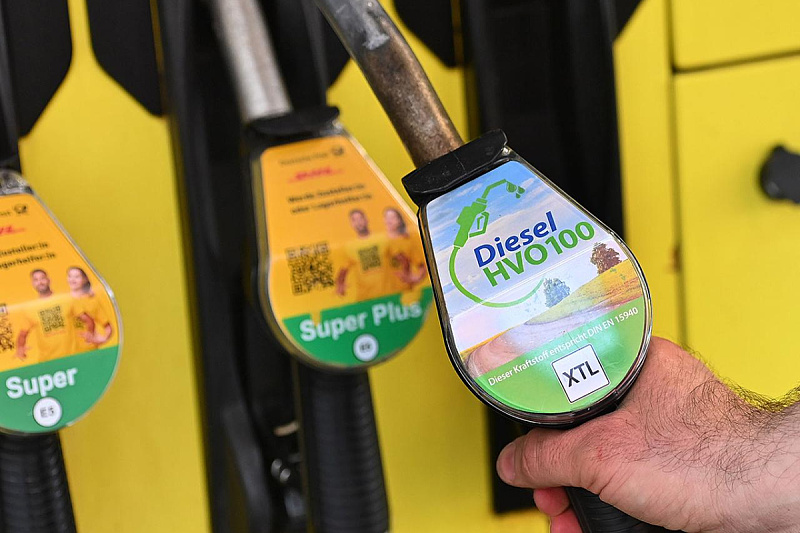
However, the reality with more environmentally friendly fuels is more complex. This is particularly true when it comes to the price factor.
Although HVO100 has no direct link to crude oil, its market price follows that of conventional diesel. The reason for this is not the production cost, but the pricing mechanism. It is sold as a substitute for diesel, so its value is determined relative to the price of diesel, with an additional markup. This means that global events affecting oil prices automatically impact the price of HVO.
At the same time, although this fuel benefits from tax incentives because it is not subject to CO2 taxes, this advantage is not fully passed on to end consumers. Instead, HVO100 often remains more expensive than regular diesel, by 15 to even 30 percent.
An additional issue is the limited availability of raw materials. Used oil and biological waste are not inexhaustible resources, and they are also competed for by other industries such as aviation and maritime transport. Moreover, the production process itself is energy-intensive, so rising energy prices further increase the final fuel cost.
There is also a technical aspect. Not all diesel engines are compatible with HVO100. Although many vehicles can run on this fuel, manufacturers often do not provide official approval. This means that using HVO can lead to a loss of warranty or certain technical issues, especially in older vehicles.
Thus, the green idea is welcome, but market logic has consumed all the benefits for the average driver. Especially in times of a growing energy crisis, when price is a key factor.