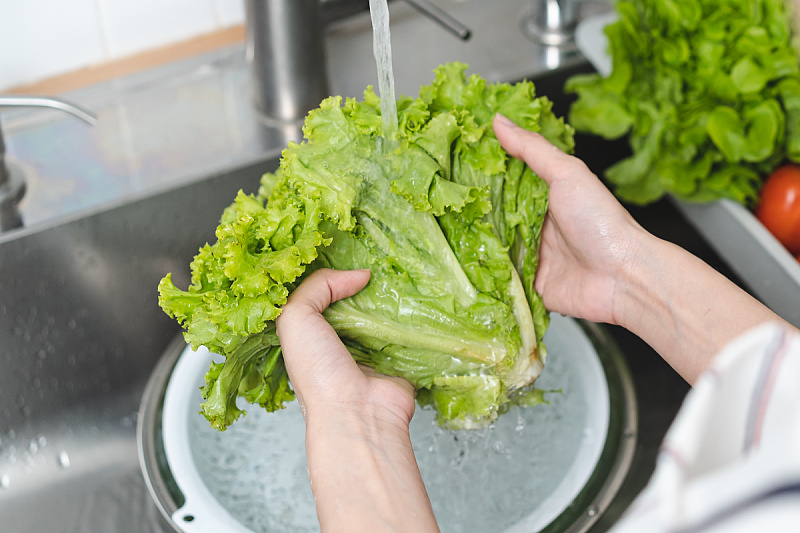
According to Health, leafy greens are the leading source of foodborne illnesses in the United States, responsible for about two million illnesses each year, according to a 2024 study. Given that the Centers for Disease Control and Prevention recently scaled back a key foodborne illness tracking program, you might wonder whether thoroughly rinsing leafy greens helps prevent illness. "Leafy greens are often associated with foodborne illnesses because they can pick up germs at many stages before they reach your plate," said Jessica Gavin, a certified food scientist and culinary expert. On the farm, factors such as contaminated irrigation water, the fertilizer used, nearby livestock, or wildlife moving through fields can introduce bacteria like E. coli and Salmonella. Spinach and lettuce are particularly vulnerable because they grow so close to the ground. "The larger the field, the less likely it is to be closely monitored," said Bryan Quoc Le, a food scientist and author of "150 Food Science Questions Answered." Specialty leafy greens, like arugula, are more often grown on smaller commercial fields, meaning workers will have better insight into what’s happening there. After harvest, additional steps like washing, chopping, processing, and packaging can further spread contamination, as more hands and equipment come into contact with the greens.
What washing can and cannot do Research shows that washing leafy greens can reduce most pesticide residues. It can also remove dirt, debris, and some bacteria from the surface. However, thorough rinsing cannot remove all germs. Most pathogens cling to surfaces, making it very, very difficult for water to penetrate and remove them. The structure of leafy greens also doesn’t help. Microbes like E. coli can hide in small crevices or even enter plant tissue, where rinsing won’t reach. Pre-washed greens, like those in salad bags, are not immune to these issues. Not only can bacteria still cling to the lettuce, but increased handling and processing can raise the risk of contamination. Listeria is especially concerning because it can survive on processing equipment and continue to grow at refrigerator temperatures. The only safe way to completely destroy bacteria on your greens is to cook them.
How to best wash leafy greens Although rinsing greens cannot remove all germs, it can help eliminate some, and there are other good reasons to wash them. For the best chance of reducing contamination, Gavin recommends the following steps: While washing leafy greens can help remove pesticides, dirt, debris, and some bacteria, it cannot completely eliminate germs. This is because certain bacteria typically stick to the leaves and hide in crevices. Still, that doesn’t mean you should skip rinsing. Try holding the leaves under cold water for about 30 seconds, drying them, and then rinsing again.