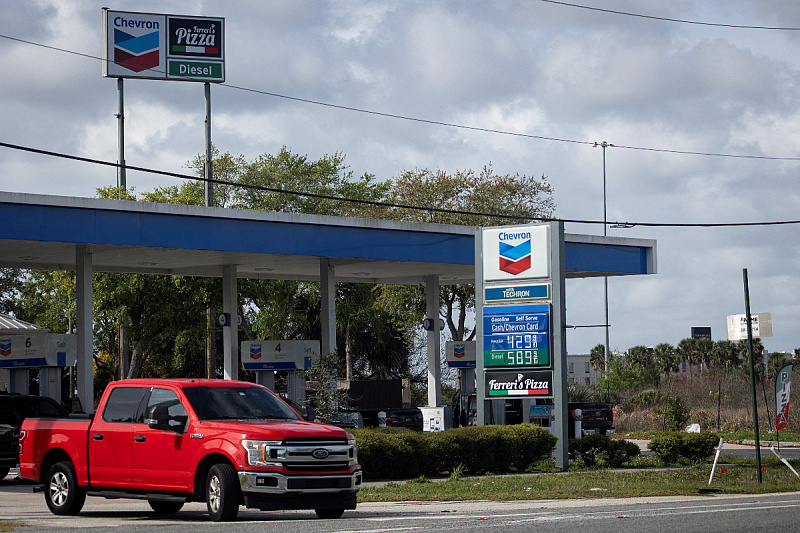
The price of U.S. crude oil surged by eight percent to $104.24 per barrel, while Brent, the international benchmark, rose by seven percent to $102.29. Brent has experienced significant volatility during the Iran war, climbing from around $70 per barrel before the conflict erupted in late February to over $119 at times. On Friday, ahead of peace talks, the price of Brent for June delivery fell by 0.8 percent to $95.20 per barrel. Iran has effectively controlled the Strait of Hormuz, a key maritime route for global oil transportation. The U.S. Central Command announced that the blockade will be "enforced impartially against vessels of all nations" entering or departing Iranian ports, as well as from Iranian coastal areas, including all Iranian ports in the Persian Gulf and the Gulf of Oman. They stated that vessels sailing between non-Iranian ports will still be allowed passage through the Strait of Hormuz. Approximately one-fifth of the world's oil trade typically passes through the Strait of Hormuz daily. Saudi Arabia, Iraq, the United Arab Emirates, Kuwait, and Iran are among the largest exporters. Traffic through the strait has also been restricted in the days following the ceasefire. Maritime tracking services report that over 40 commercial vessels have passed through since the ceasefire began. Claudio Galimberti, chief economist at Rystad Energy, said the blockade will drive up prices and potentially impact the course of negotiations. "This means the oil market will be even tighter than before. However, I believe this is a negotiation tactic that will ultimately lead to the full opening of the Strait of Hormuz. So, more pain now, but more gain later," he said. On the other hand, Jim Krane, an energy fellow at Rice University, believes the blockade could be effective as a long-term strategy to pressure Iran's economy but is not a good short-term negotiation tactic at a time when the oil market is already under significant strain. "If the oil market deficit increases again, it will inflict pain on every person on Earth who depends on market oil prices," he said.