The price of the global benchmark Brent crude oil was $95.10 per barrel on Wednesday morning, while U.S. oil West Texas Intermediate (WTI) fell to $91 per barrel.
The drop comes after oil prices surged above $100 per barrel on Monday before falling again, following U.S. President Donald Trump's order to blockade Iranian ports after negotiations between the two sides broke down over the weekend, reports the BBC.
Trump later stated that Tehran had contacted Washington regarding a potential agreement.
Addressing reporters outside the White House on Monday, he said, "I can tell you that the other side called us. They would very much like to reach a deal."
Separately, The New York Times reported that Iran proposed a suspension of uranium enrichment for up to five years, an offer the U.S. rejected, insisting on 20 years.
The report, citing Iranian and U.S. officials, also noted that Washington and Tehran exchanged proposals for halting Iranian nuclear activities during talks in Pakistan, but it remained far from an agreement.
However, it adds that the talks suggested there might still be a path to a peace agreement, with a possible second round of face-to-face negotiations.
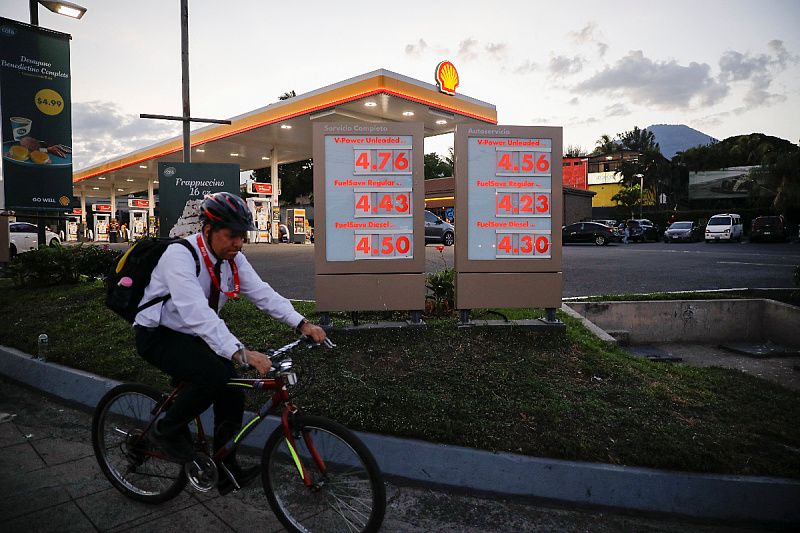
Although prices have fallen from $100 per barrel, crude oil remains much more expensive than before the war with Iran began on February 28, when it was around $73 per barrel.
In its latest monthly report, the IEA announced that global oil stocks experienced the "largest disruption in history" in March, falling by 10.1 million barrels per day (mb/d) to 97 mb/d.
Last month, all 32 IEA member countries agreed to release 400 million barrels from their oil reserves to alleviate supply constraints, and Birol signaled that the agency would be ready to act again.
Energy prices have risen as nearly one-fifth of global oil and gas shipments typically pass through the strait.
On Monday, U.S. Energy Secretary Chris Wright stated that he expects oil prices to peak in the coming weeks, as the shipping route remains effectively closed.
"We will witness high energy prices—and possibly even rising ones—until we see significant maritime traffic through the Strait of Hormuz," Wright said at the Semafor World Economic Forum in Washington.
"That will likely mark the peak of oil prices at that time. It will probably be sometime in the next few weeks."