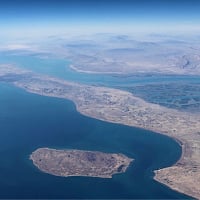
Protecting merchant ships in this narrow sea passage represents one of the most complex security challenges of today, and the stability of the entire global economy depends on its navigability. In an exclusive video report by Reuters, experts explain why securing this "chokepoint" is so demanding and what the closure or obstruction of passage through the Strait of Hormuz would mean for the world. Former captain of the British Royal Navy and editor of the RUSI journal, Kevin Rowlands, highlights that the security situation in the Gulf is extremely complex. "If you are a ship operator or captain in that region, it is very difficult to assess whether it is worth taking the risk and whether it is even economically viable to do that job," he explains. What is actually at stake? The Strait of Hormuz, located between Iran and Oman, is the only maritime exit for oil and gas-producing countries such as Kuwait, Iraq, Qatar, and the United Arab Emirates. Its blockade or insecurity directly threatens the global market. An energy crisis is a constant threat because oil prices are extremely sensitive to any instability in this area, and a price surge could trigger a new global cost-of-living crisis. Additionally, there is a threat to food production, given that over 33% of the world's fertilizers, including sulfur and ammonia, pass precisely through this strait, and a prolonged disruption could cause a global food supply shock. On top of that, there is the problem of skyrocketing insurance costs. Due to previous attacks on ships, insurance companies have already raised premiums by an incredible 300 percent, causing many companies to temporarily suspend traffic. Why is Hormuz so difficult to defend? The answer lies in geography and asymmetric military tactics. Unlike the English Channel, there is no alternative maritime route for Hormuz. Ships simply have to pass through there. At its narrowest point, the strait is only 20 nautical miles wide. The shipping lanes are just two miles wide, and ships must maneuver right along the mountainous Iranian coast, which provides a perfect natural cover for military forces. Although the conventional Iranian navy has suffered significant losses in recent escalations, the Islamic Revolutionary Guard Corps (IRGC) relies on "anti-access/area denial" (A2/AD) tactics. Military analysts warn that their arsenal still poses a huge threat, as it includes coastal missile batteries, "swarms" of small, fast boats designed to overwhelm the radar systems of Western ships, massive drone production capacities (with estimates reaching up to 10,000 per month), and underwater mines and mini-submarines. "Layered defense" instead of World War II convoys So how to protect ships? U.S. President Donald Trump recently announced the possibility that the U.S. might offer insurance and military escort for tankers. Similar plans for joint missions have been considered by European countries such as the United Kingdom, France, and Germany. However, Captain Rowlands warns that modern ship protection differs significantly from images in historical films. "People usually imagine long lines of oil tankers with a warship at the front and back. The world is different now. Instead of a classic convoy, a 'layered defense' is applied. This involves satellite and aerial surveillance, the use of drones and ships that create a clear picture on the ground, which is then shared in real-time with shipping companies," explains Rowlands. Lessons from the Red Sea Western allies already have experience with similar missions. The fight against Somali pirates was successful, but confronting the Yemeni Houthis in the Red Sea has proven much more difficult. The Houthis, although far less equipped than Iran, have managed to divert a significant portion of global trade to the long route around the Cape of Good Hope. Experts agree on one thing: short-term escorting of three to four ships per day through Hormuz is feasible with destroyer support, but long-term securing of this passage would require enormous resources, which is why redirecting tensions to diplomacy and maintaining a permanent ceasefire must be a priority for the entire world.
Society
The Powder Keg of the Middle East: Why the Strait of Hormuz is Virtually Impossible to Fully Secure
Although a ceasefire is currently in effect, the attention of the global and maritime public is once again focused on the Strait of Hormuz due to the so-called double blockade decided by U.S. President Donald Trump.
ingestion