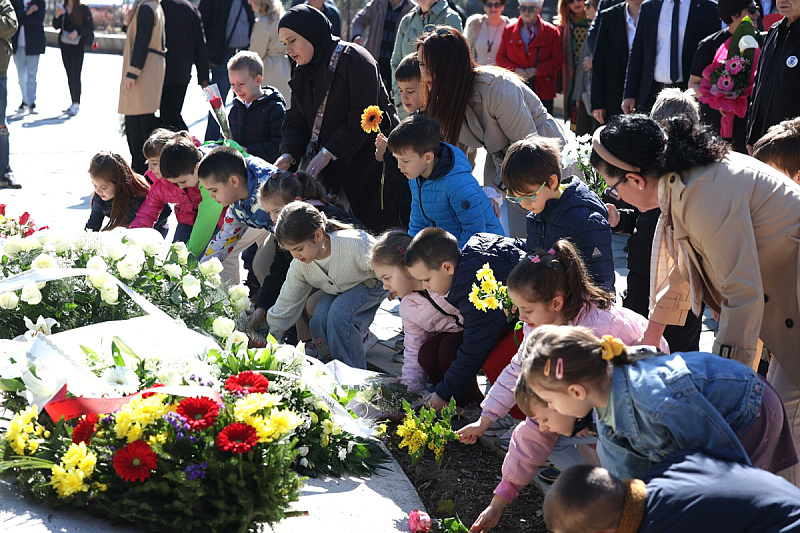
On the occasion of marking Sarajevo City Day, the Chairman of the Presidency of Bosnia and Herzegovina, Denis Bećirović, emphasized that Sarajevo remains an anti-fascist city.
"Our homeland Bosnia and Herzegovina was and remains an anti-fascist state. Anti-fascism is at the foundation of Bosnia and Herzegovina's statehood, which is why it is very important to preserve anti-fascist values. The idea of Sarajevo, Bosnia and Herzegovina, and community has triumphed. All those who attack Bosnia and Herzegovina will sooner or later end up in the dustbin of history, while Bosnia and Herzegovina and Sarajevo endure," said Bećirović.
The head of BiH diplomacy, Elmedin Konaković, noted that April in Sarajevo carries special symbolism and strong emotions, as it reminds us of both the days of liberation and the time of attack and the difficult and bloody struggle for the city's survival.
"Precisely because of this, above all, we pay tribute to the people who defended this beautiful city on multiple occasions from various forms of fascism and succeeded in preserving it each time," said Konaković.
By laying flowers and reciting the Fatiha, tribute was also paid to the fallen police officers who died during the military-police operation "Trebević II" on October 26, 1993.
The victims of the operation were Admir Hebib (1969), Kemal Kojić (1960), Dragan Miljanović (1967), Slaven Markešić (1965), Srđan Bosiljčić (1963), Elvir Šovšić (1974), Hamid Humić (1959), Jasmin Čamidžija (1968), and Izet Karšić (1959).
Delegations also paid tribute at the Memorial to the Murdered Children of Sarajevo.
During the longest siege in modern history, 1,601 children were killed in Sarajevo. The Day of Remembrance for the Murdered Children of Sarajevo—May 5—has been permanently declared a Day of Mourning in the Sarajevo Canton.