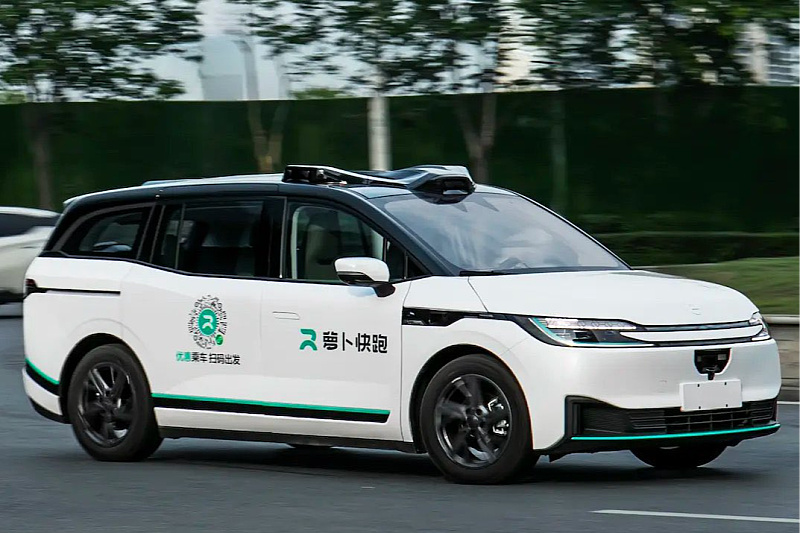
Several autonomous robotaxis from Baidu's Apollo Go service were involved in a chain collision on a Chinese highway earlier this week, serving as a fresh reminder that when these systems fail, things can quickly become complicated. The incident has reignited investigations into how autonomous fleets respond to unexpected malfunctions in real-world conditions, where so-called "edge cases" are part of daily life rather than rare exceptions.
It has since been revealed that "system malfunctions" caused several Baidu robotaxis to abruptly stop on highways in the city of Wuhan. Video clips shared on social media show multiple vehicles halted with hazard lights on, either in the middle of lanes or awkwardly parked on the side, seemingly unable to respond.
[YOUTUBE]2039153730533405102[/YOUTUBE]
One dashcam video posted on social media platform X shows a driver crashing into a stopped robotaxi, which was in the middle lane of a wide highway. According to the driver, there was no time to react, and the collision left his SUV significantly damaged.
On the same day, at least two more collisions were reported. In one instance, a Baidu robotaxi was hit by another vehicle from the rear. As if that wasn't bad enough, the malfunctions also left numerous passengers trapped inside the robotaxis, adding another layer of concern beyond the collisions themselves.
In an interview with Wired, a local student said she was stuck in one of the vehicles for 90 minutes along with two friends. The robotaxi reportedly stopped four or five times during the trip before coming to a halt near an intersection. The car's display instructed them to keep their seatbelts fastened, but it took 30 minutes to get in touch with a Baidu representative.