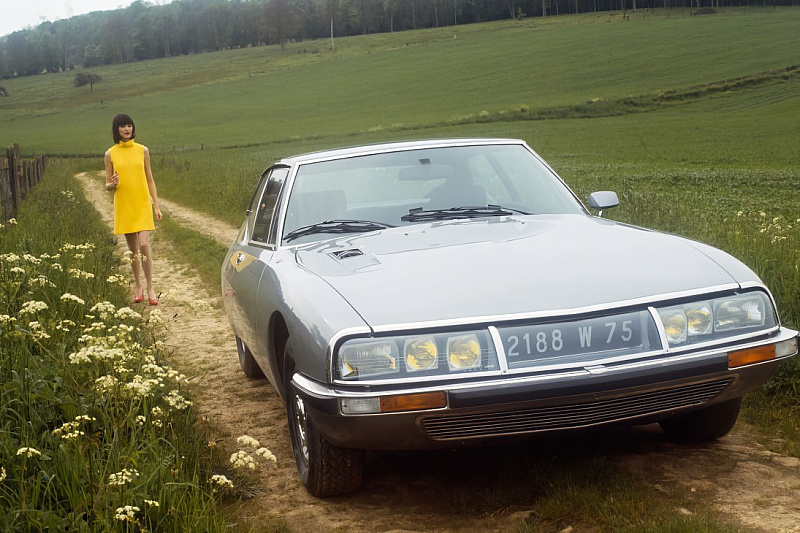
Long before software, sensors, and safety warnings in the form of notifications, engineers solved complex problems relying almost exclusively on pure mechanics and an understanding of physics. One of the most impressive examples of this approach was the all-powerful hydraulic system of the Citroën SM—seen earlier on the iconic DS/Shark—which could redistribute the vehicle's weight, automatically adjust suspension height and stiffness, and maintain stability even in extreme situations. On top of all that, the car could drive on just three wheels, and drivers could sometimes manage to change a punctured tire without a jack. An interesting video published on the YouTube channel @autoofficialvideos shows how such solutions did not require warning systems in digital form, safety protocols, or driver intervention via electronics. The author of this video also wanted to show Chinese BYD, whose sports car Yangwang U9 can also drive on three wheels, that this system existed more than 50 years ago on Citroën vehicles. What is even more fascinating is that there was no assistance from electronics, nor pop-up messages, performance limitations, or "permissions" that the system had to approve. Everything happened in real time, through precisely designed mechanical components built to assist drivers and adapt to road conditions. Today, cars are undoubtedly faster, safer, and more technologically advanced than ever before. Software controls almost every aspect of driving, from stability to fuel consumption. Yet, there is a special value in a time when engineering was guided primarily by the laws of physics, not lines of code—when solutions were tangible, elegant, and incredibly efficient without a single digital signal.
Society
Cars before sensors and software: Driving on three wheels with the Citroen SM? No problem.
In the era before digital systems and electronic aids, automotive engineers created advanced solutions relying solely on the principles of physics, mechanics, and innovative design. Citroen has been and remains unmatched in this.
ingestion