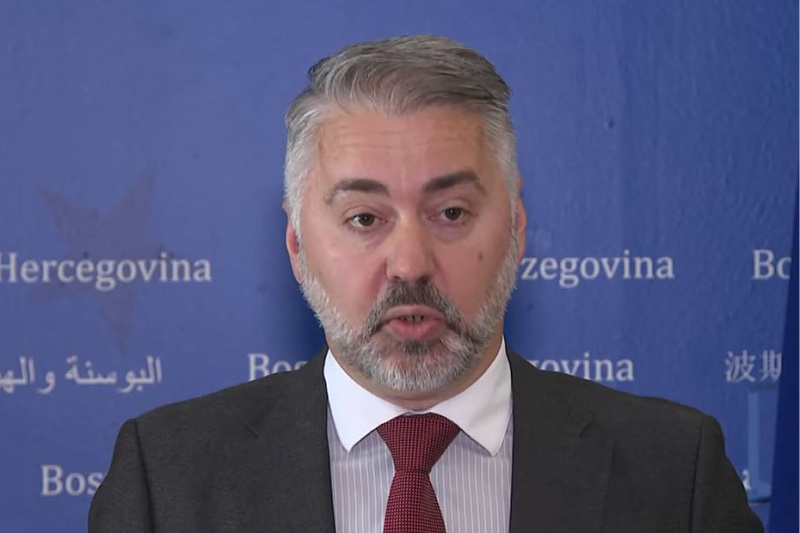
As the keynote speaker at the session of the Association of Independent Intellectuals - Krug 99 on the topic "Whose Property Is It? On the Eco-Energy Sovereignty of Bosnia and Herzegovina," Hodžić emphasized that despite the legal prohibition on disposing of state property, i.e., the property of citizens, as well as numerous decisions of the Constitutional Court of BiH, significant steps are being taken these days regarding the distribution of that property. "The economic sovereignty of BiH is not immune to foreign influence, and therefore we cannot say that our state freely makes its own decisions regarding economic policies, development strategies, and resource management," stated Hodžić. He added that the property of the citizens of Bosnia and Herzegovina, along with the property of the state of Bosnia and Herzegovina and the companies operating within it, forms the basis of the economic sovereignty of the citizens of Bosnia and Herzegovina. "Sovereign management of energy sources, their production and use, are among the fundamental postulates that affirm the state's authority to build a strong domestic economy through tax, trade, and fiscal policies, and to avoid excessive influence from foreign corporations and governments, thereby strengthening overall economic sovereignty," Hodžić stressed. He believes that investors are welcome, but the energy transition should strengthen the sovereignty of citizens, because public goods are their property, not the monopoly of those for whom both clean and dirty energy are only worthwhile if they bring profit. "Energy and economic sovereignty must be a priority for every responsible government in BiH, and legal security as the foundation for economic growth and development for the benefit of all its citizens as bearers of sovereignty," Hodžić conveyed.
Society
Analyst Hodžić: The privatization of social property was a model for the upcoming "privatization" of public goods.
Political analyst Sejfudin Hodžić stated today in Sarajevo that the privatization of social property, the property of working people and citizens, served as a model for the upcoming "privatization" of public goods and the property of the citizens of Bosnia and Herzegovina.
ingestion