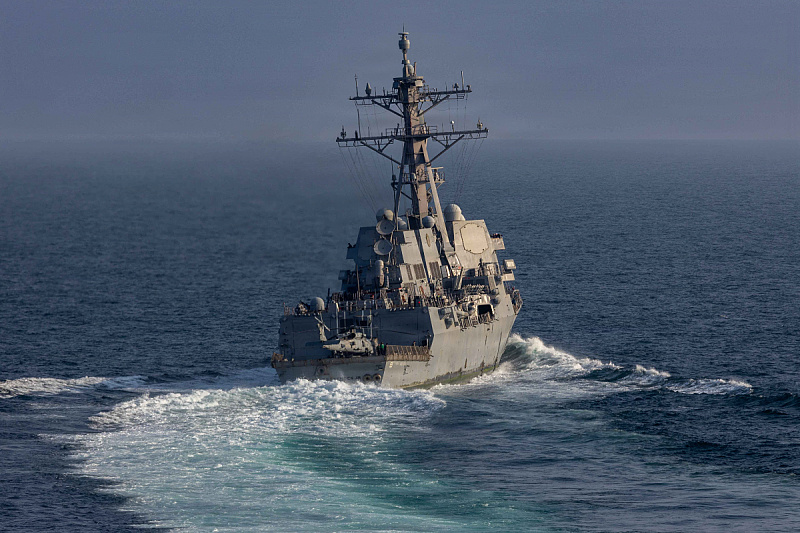
According to the same sources, Iran has issued a clear warning through intermediaries in Pakistan that the American ship would be targeted within 30 minutes if it continued its movement towards the strait. Following that warning, as claimed by the Iranian side, the American destroyer halted its movement.
"The American destroyer stopped its movement and retreated from the direction of the Strait of Hormuz after the decisive reaction of Iranian forces and the warning that Tehran issued through its delegation in Pakistan," Iranian sources state.
According to available information, Iranian authorities notified intermediaries in Pakistan that the American warship would be targeted within 30 minutes if it continued moving towards the strategically important strait. Shortly thereafter, the American destroyer, as claimed by the Iranian side, changed course and moved away from the area.
On the other hand, an American official stated that American warships passed through the Strait of Hormuz towards the Arabian Sea but then returned to the Gulf, emphasizing that it was a "freedom of navigation operation in international waters."
Simultaneously, separate meetings were held in Islamabad between delegations from the United States and Iran with Pakistani Prime Minister Shehbaz Sharif, ahead of planned peace negotiations between the two countries.
Details about the progress of the negotiations are currently limited, and numerous key issues remain unresolved. Although Iran and the U.S. previously agreed to a conditional two-week ceasefire, today's talks represent an opportunity to consider the main points of disagreement.
Diplomatic sources assess that an extremely complex process lies ahead, with numerous obstacles that could hinder reaching a lasting agreement between the two sides.