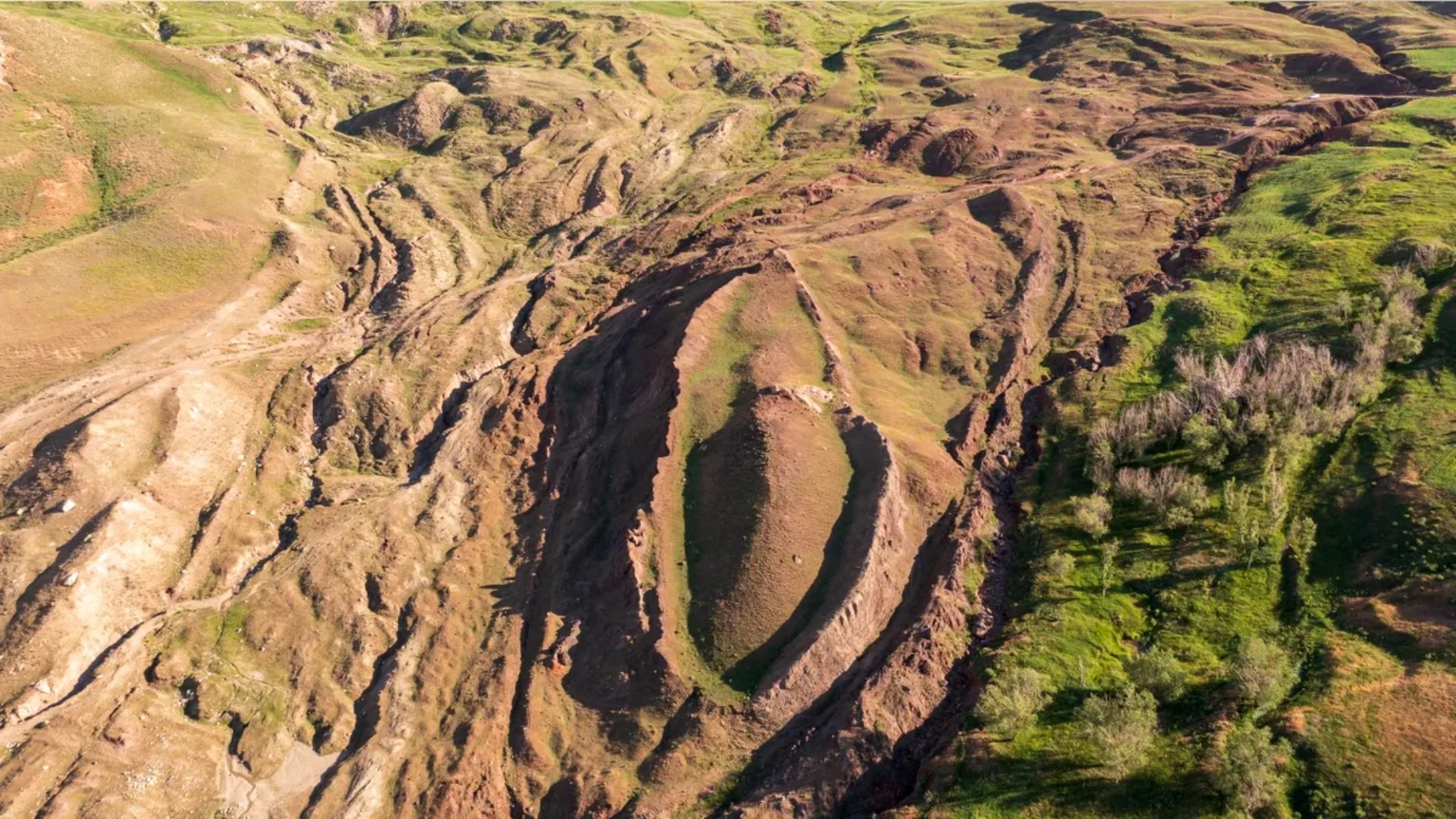
A new discovery in Turkey has reignited debates over the existence of Noah's Ark, as American researchers claim to have identified structures matching biblical descriptions. The research has focused on the Durupinar formation near Mount Ararat, where an independent team used ground-penetrating radar to uncover a network of tunnels and corridors leading to a central space. Researcher Andrew Jones stated that these structures are not random but follow a specific pattern. "What's interesting is that these voids align underground and are not random. These tunnels follow a pattern," he emphasized.
According to the Bible, Noah's Ark had three internal levels to shelter humans and animals during the Great Flood over 4,300 years ago. Jones links this description to the recent findings, adding that thermal technology analyses suggest the presence of a ship-shaped structure buried in the ground.
The area where the formation is located was discovered in 1948, after heavy rains and earthquakes revealed the mysterious shape. Biblical measurements for the ark, approximately 157 meters long and 26 meters wide, match the dimensions of the structure on the ground, according to researchers. However, many scientists remain skeptical, considering it a natural formation. Meanwhile, the research team believes the findings point to a man-made object and aims to conduct deeper drilling to verify the hypothesis.