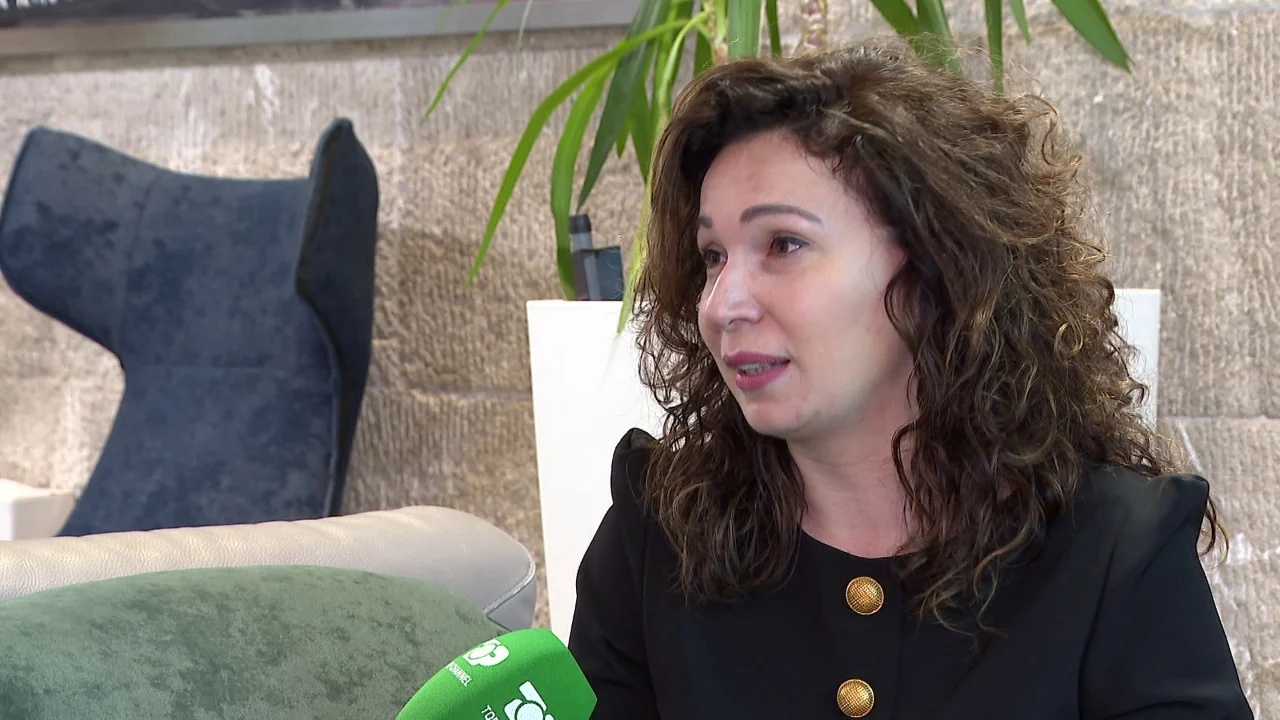
Beneath the costume of power hides the heart of a mother raising a son with autism spectrum disorder and a little daughter who, when speaking about him, becomes even more tearful. Florinda Zegullaj says through tears that she finds strength in her little girl, who doesn't know how to explain it to her.
"The sister didn't understand her brother's behavior, and it's almost impossible to clearly explain that her brother is different and we can't change his behavior. It's the parents who seek support and help from social workers. Today he is 6 years old, but he has grown up in difficult conditions; my day is filled with episodes. I feel sorry for my daughter, who has become my mentor and my greatest support," Florinda says.
But autism doesn't discriminate, and sometimes the waves crash hard, and the demand for support never ceases.
"My son was diagnosed at the age of 2 and has been receiving developmental therapy since then. Today he attends school and is in the fourth grade. He is supported by a dedicated teacher and has an individual program. The problem is that the individual programs are not designed in accordance with international standards."
Like every mother who has a child with spectrum disorder and tries with all her might, a great worry accompanies her every day.
"We forget that very soon these children become isolated within the walls of their parents' home. There are no services, no employment opportunities. On the other hand, I always say, what will happen to them when the parents are no longer here? I believe this is the hidden fear of everyone."
She never misses any meeting on the topic of autism spectrum disorders, where mothers never stop seeking support from institutions, even though she herself holds a position.
"God has helped me to be appointed prefect of an important region like the Korça region. I pray to God to give me the opportunity to do everything I can for all the children and families burdened by this weight."
Florinda also holds a position today, and as prefect, she has plans to support children with spectrum disorders like her son, but she won't express them until they are tangible. / Top Channel