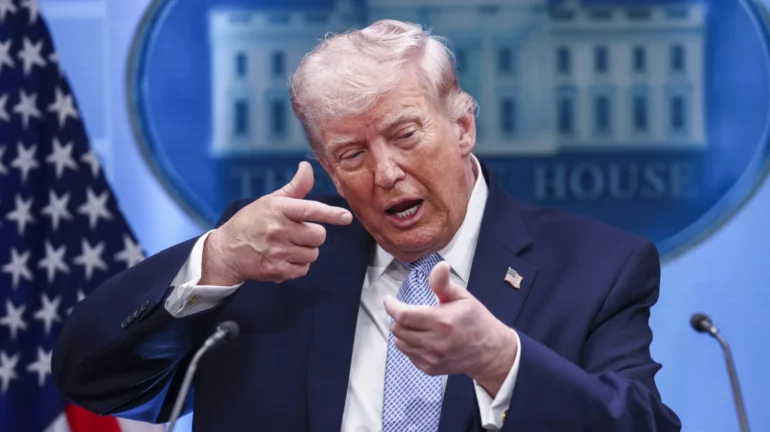
U.S. President Donald Trump is considering the possibility of resuming limited military strikes against Iran, as well as imposing a naval blockade in the Strait of Hormuz, following the failure of peace talks in Islamabad. According to The Wall Street Journal, the White House chief is keeping "all options on the table" in an effort to increase pressure on Tehran. Among the scenarios discussed after the inconclusive negotiations in Pakistan is a full-scale military campaign, although this is considered less likely due to the risk of further destabilizing the region. At the same time, the U.S. administration is analyzing the possibility of a temporary blockade of the Strait of Hormuz, one of the world’s most important energy transport routes, with the aim of gradually transferring responsibility for escorting commercial vessels to U.S. allies. Despite rising tensions, U.S. officials emphasize that President Trump remains open to a diplomatic solution. White House spokesperson Olivia Wells did not provide details on specific plans but confirmed that the naval blockade is already in effect and that other options continue to be considered. Meanwhile, sources from Washington indicate that the U.S. "red lines" in negotiations with Iran include ensuring free passage through the Strait of Hormuz, halting uranium enrichment and dismantling related facilities, surrendering enriched uranium stockpiles, and ending support for groups such as Hezbollah in Lebanon and the Houthi rebels in Yemen. The talks in Pakistan, led by Vice President J.D. Vance, failed after Iran refused to abandon its nuclear program. President Trump has repeatedly emphasized that preventing Iran from obtaining nuclear weapons remains one of the primary reasons for this escalation.
Society
Trump is considering new military strikes against Iran after talks break down.
U.S. President Donald Trump is considering the possibility of resuming limited military strikes against Iran, as well as imposing a naval blockade in the Strait of Hormuz, following the failure of peace talks in Islamaba
ingestionalbania