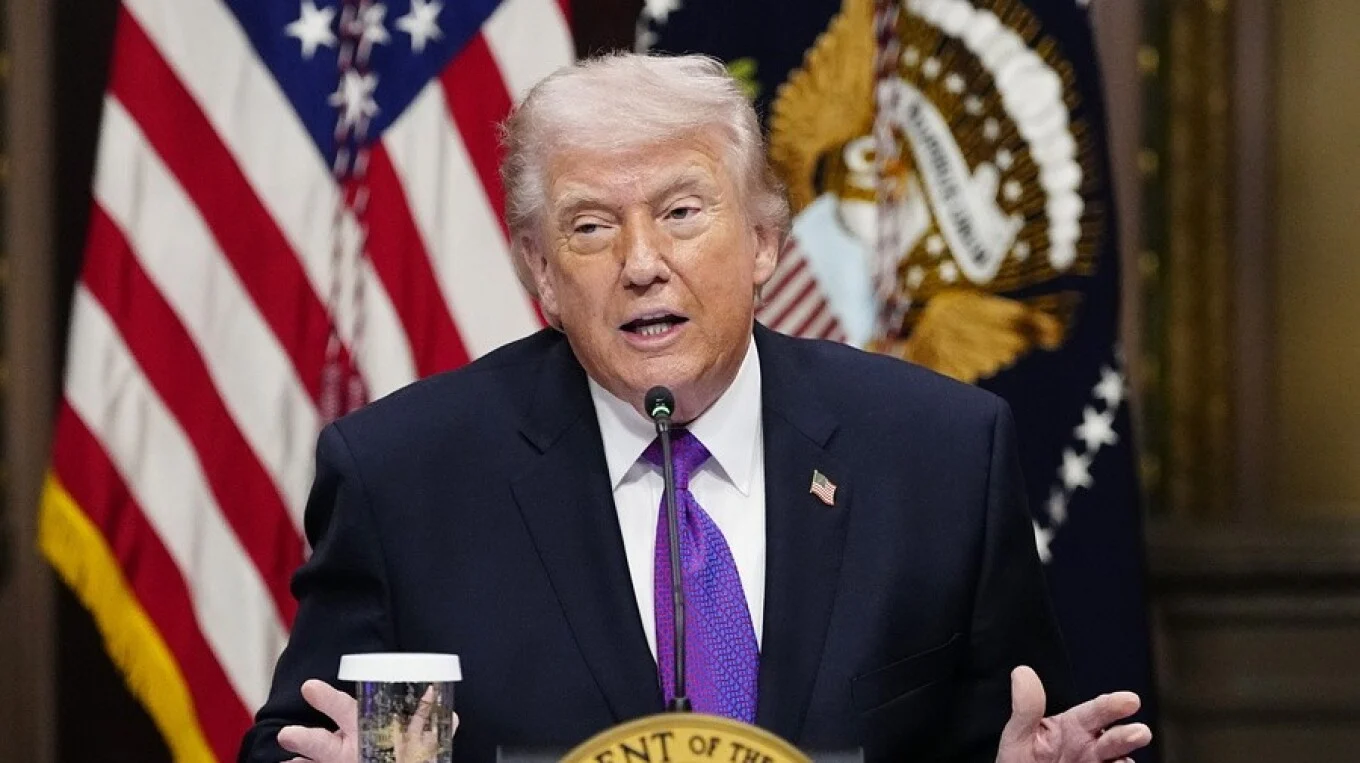
Donald Trump began his speech by praising NASA for the launch of the Artemis II mission, before shifting to a broad assessment of the conflict with Iran.
Addressing the American people from the White House, the U.S. president claimed that American and Israeli forces have dealt Tehran "swift, decisive, and devastating" blows, speaking of "victories few have ever seen."
He stated, "Iran's navy has been wiped out, its air force is in ruins," adding that the country's leadership has been largely neutralized and that the command structure of the Revolutionary Guard "is now being dismantled."
Trump also asserted that the U.S. is working to destroy Iran's drone and missile capabilities, while reiterating that since 2015 he has been committed to never allowing Tehran to acquire nuclear weapons.
Referring to the June attacks, he noted that he initially sought a diplomatic solution; however—as he said—the Iranian leadership rejected his initiatives, ultimately leading to the attacks on nuclear facilities in June, amid the conflict with Israel.
According to Donald Trump, Iran was "one step away" from purchasing a nuclear bomb, while the facilities struck by B-2 bombers have been damaged to such an extent that "it will take months to restore them."
The U.S. president assessed that the main strategic objectives of the operations are "near completion," while leaving open the possibility of new heavy attacks.
"If we see the slightest movement toward nuclear weapons, we will strike again very hard," he warned, adding that the U.S. will continue to act "very aggressively" over the next "two to three weeks," while contacts will continue in parallel.
At the same time, he attempted to distance the operations from the goal of regime change, emphasizing that "regime change was never an objective," although—as he said—"in practice, this has already happened," since "most of their leaders have been killed."
Simultaneously, he reiterated that the U.S. has no energy dependence on the Middle East, stressing that its presence in the region is not linked to oil.
"We don't need their oil. We don't need anything they have," he said, emphasizing that U.S. involvement is in support of its allies.
In the same context, he argued that the responsibility for securing navigation in the Strait of Hormuz should fall to the countries that depend on the region for energy, not the United States.
"There is no reason for us to do this," he said, calling on allies to take the initiative to protect the critical maritime passage.